
Last updated September 23, 2026
Whole-system duct and dryer vent check with before-and-after photos - you see exactly what came out of your vents
That "$99 whole-house special" is a bait ad - the real number appears once they are in your hallway, or the "clean" is a shop-vac at the register. We photograph the inside of your ducts before and after instead.
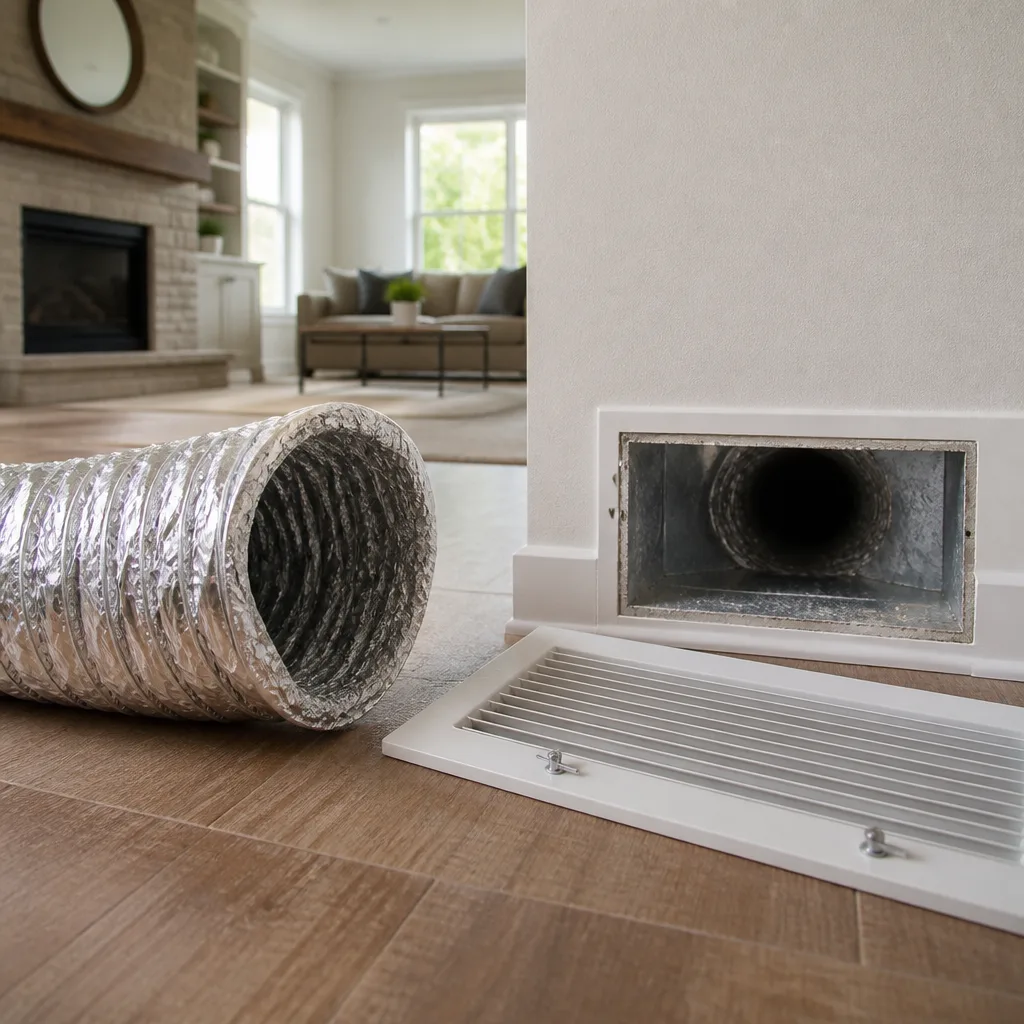
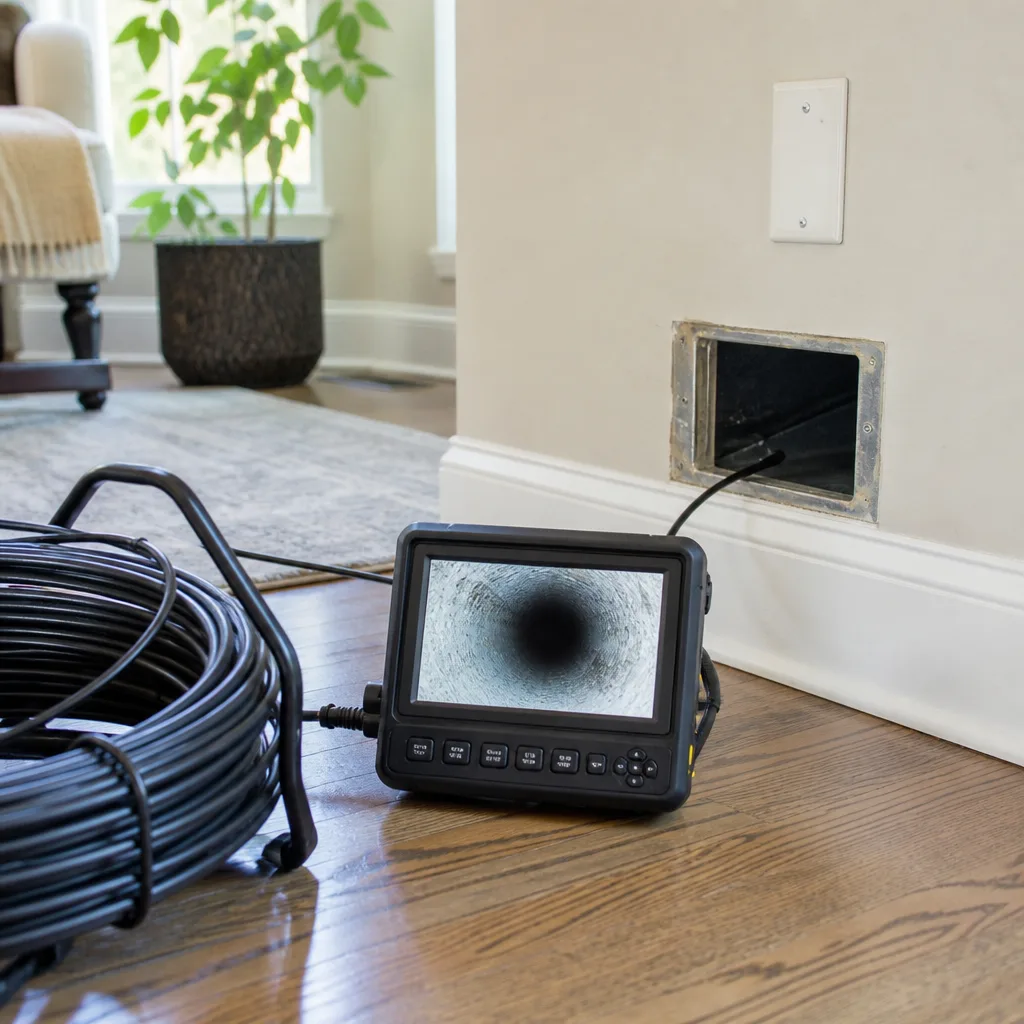
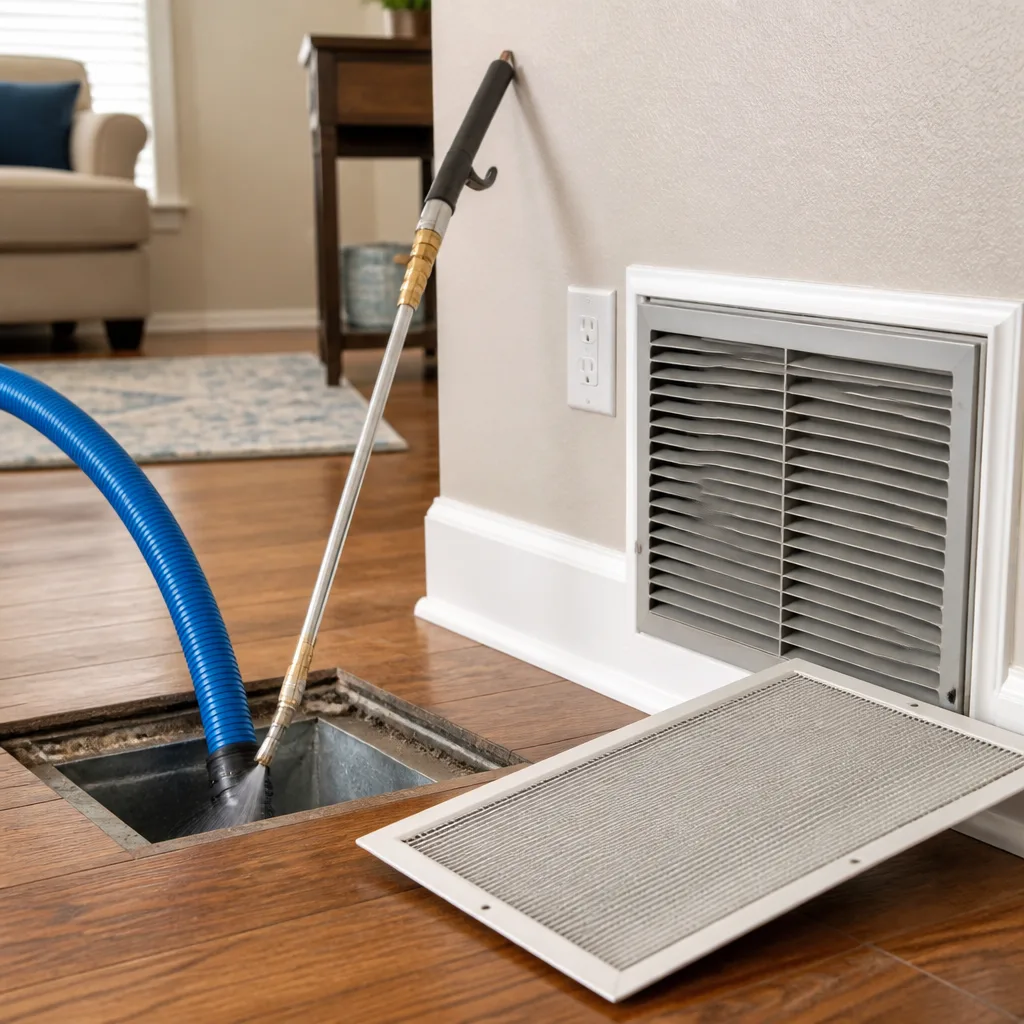
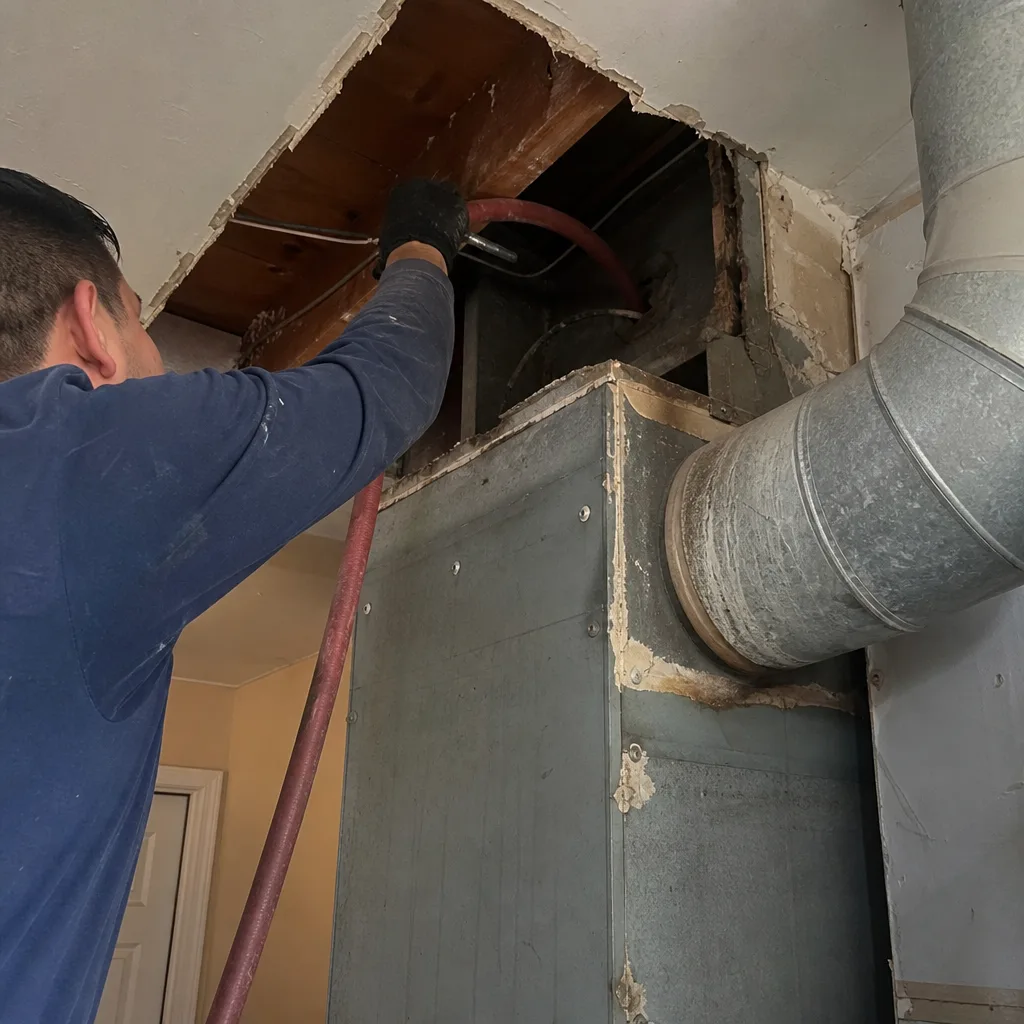 Before
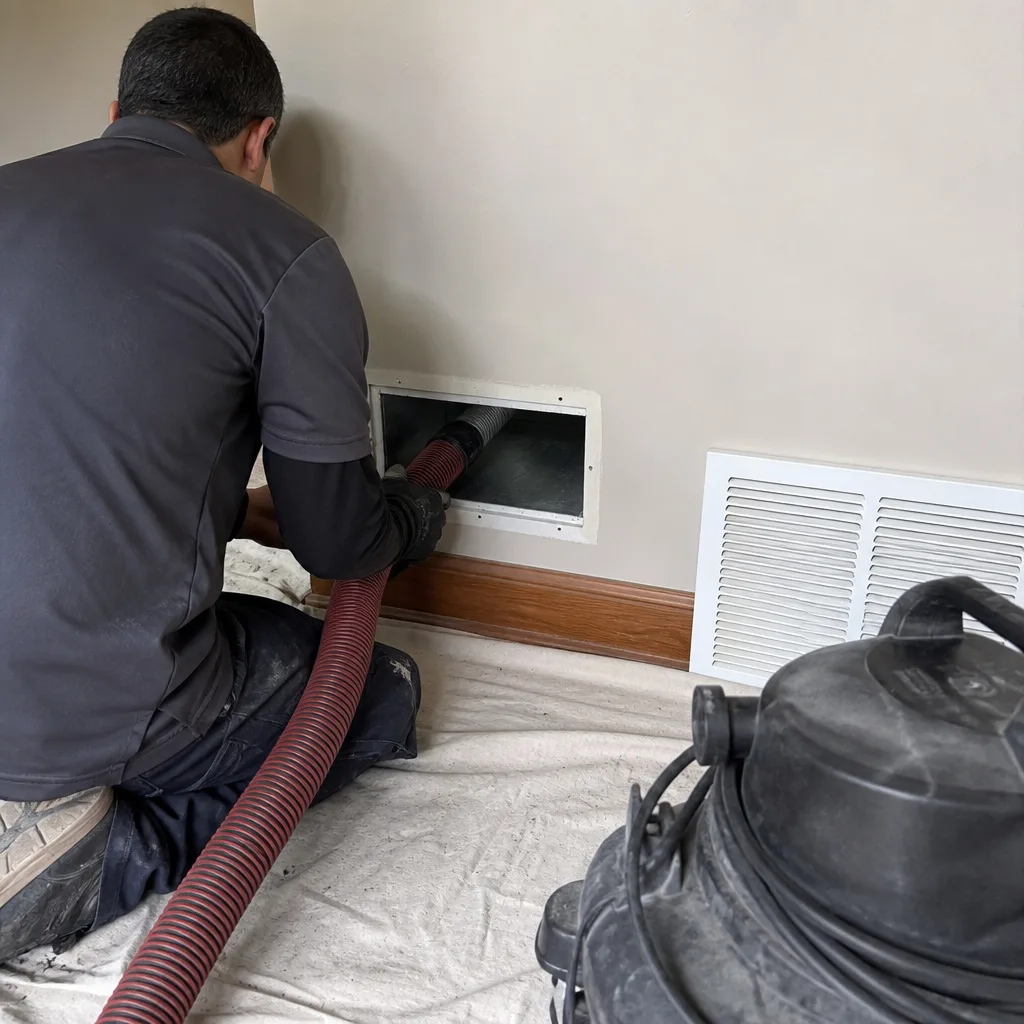 After
After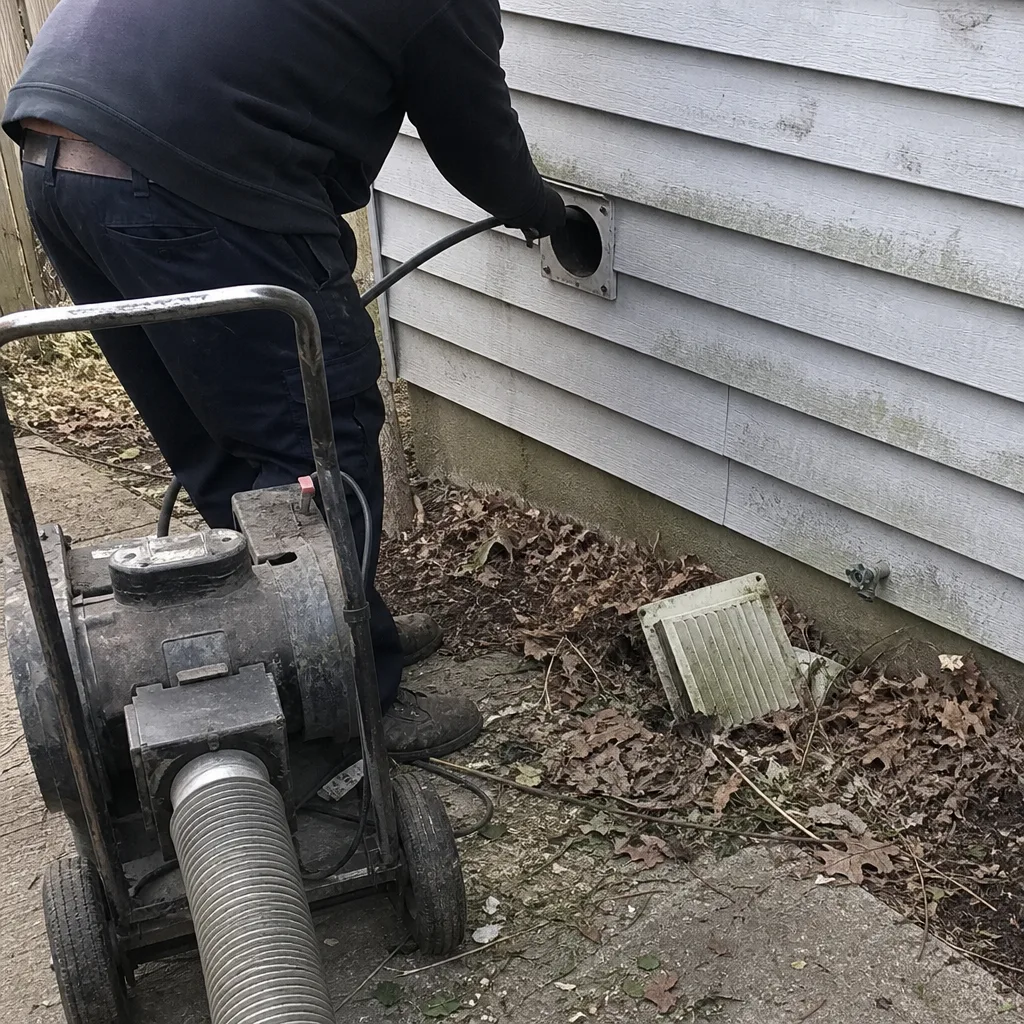 Before
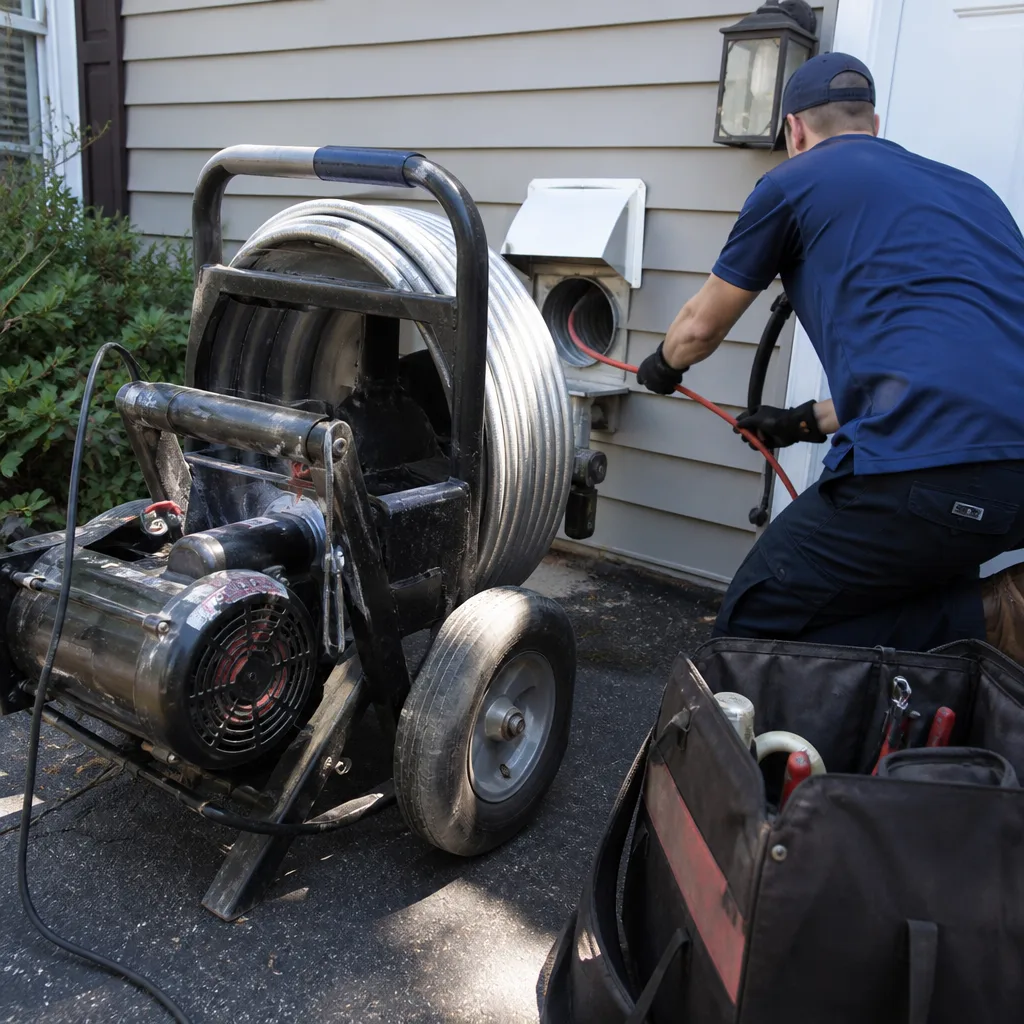 After
After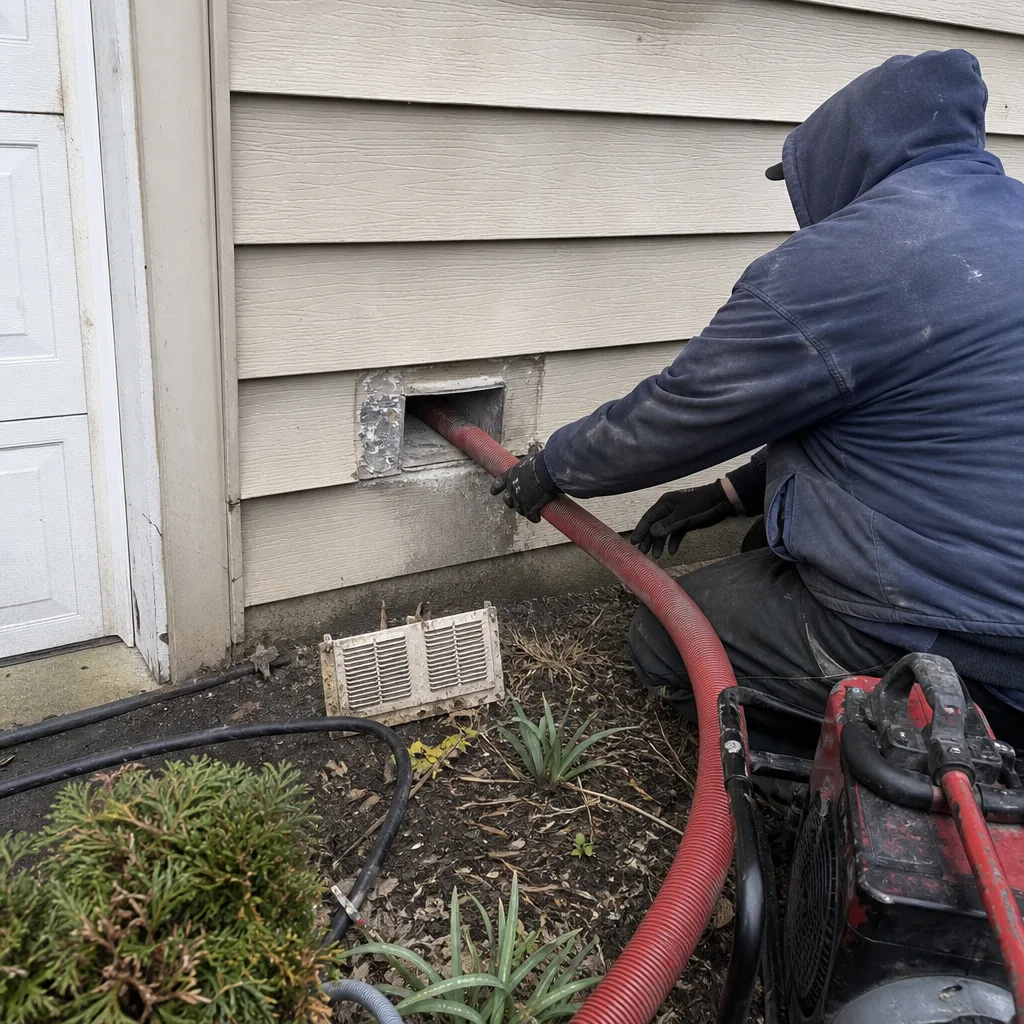 Before
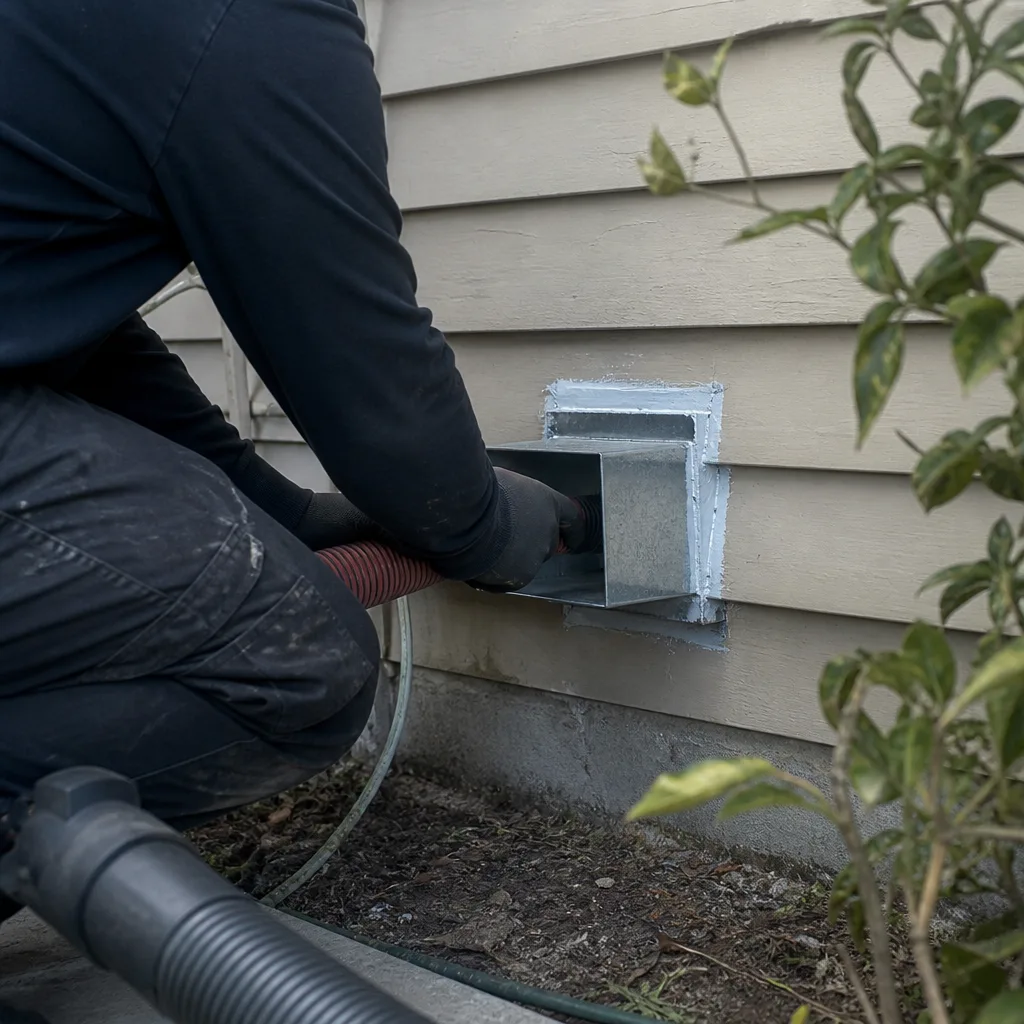 After
AfterHow to Hire a Air Duct Cleaning Contractor in Naperville: A Step-by-Step Guide
The $79 air duct cleaning coupon has a business model, not a service. The truck arrives, the technician finds “urgent problems” the homeowner cannot see, and the final invoice runs $400 to $900 for work that may never have happened at all. In Naperville, where homeowners in neighborhoods like Ashwood Heights and Cress Creek have paid premium prices for homes built between 2015 and 2025, this bait-and-switch routine is especially costly. The defense is not skepticism. It is knowing exactly which four questions to ask before anyone enters your home, which documents to demand before work starts, and how to tell a truck-mounted negative-pressure extraction system from a portable shop-vac with a brush attachment. This guide walks through each step.
Quick Answer
Hiring an air duct cleaning contractor in Naperville means vetting four things before scheduling: a written scope of work with itemized pricing, proof of liability insurance and NADCA certification, a documented photo record of every duct run, and a written warranty that defines “clean” with measurable criteria. The right contractor produces these without being asked. The wrong one deflects, delays, or disappears.
Table of Contents
- Why Air Duct Cleaning Needs Vetting, Not Just Shopping
- The Four Documents Every Legitimate Contractor Produces Before Starting
- How to Verify Equipment on Site Before the Job Begins
- Red Flags in the First Phone Call
- What the Contract Should Say About Photography, Completion, and Warranty
- How to Get a Second Opinion Without Paying Twice
- Naperville-Specific Considerations: Climate, Codes, and Common Issues
- Common Mistakes to Avoid
- When to Call a Professional
- Frequently Asked Questions
- The Bottom Line
BeforeAfterWhy Air Duct Cleaning Needs Vetting, Not Just Shopping
Most home services are evaluated after the work is done. Did the plumber fix the leak? Did the roofer stop the water? Air duct cleaning is different. The work happens inside walls, above ceilings, and behind metal panels the homeowner will not remove again. You cannot evaluate it by walking through your living room. You evaluate it by the documentation you received before the truck left.
This asymmetry, between what you paid for and what you can verify, is why the industry attracts operators who optimize for speed and obscurity. The typical bait-and-switch runs like this: a coupon or online ad promises whole-house duct cleaning for $79 to $149. The technician arrives, inspects the system, and reports dangerous mold, blocked returns, or failed components. The price climbs. The work, if any occurs, is done with portable equipment that lacks the suction to remove settled debris from a main trunk line. The homeowner sees no difference in air quality, has no photos, and has no recourse.
In Naperville, this pattern is particularly relevant for newer construction. Homes built from 2015 to 2025 in developments like Tall Grass and Stillwater often have flexible ductwork (flex duct) rather than the rigid metal ducts found in older properties. Flex duct is more easily damaged by aggressive brushing. It is also more likely to harbor construction debris, drywall dust, and sealant residue from the build process. A contractor who does not adjust technique for flex duct, or who cannot explain that adjustment, is not equipped for the homes that dominate Naperville’s recent market.
The vetting process described in this guide is designed to surface these competence gaps before money changes hands. It is not about finding the lowest price. It is about finding a contractor whose claims can be checked against documents, photographs, and independently verifiable credentials. For more guides & resources on vetting home services, visit our blog.
The Four Documents Every Legitimate Contractor Produces Before Starting
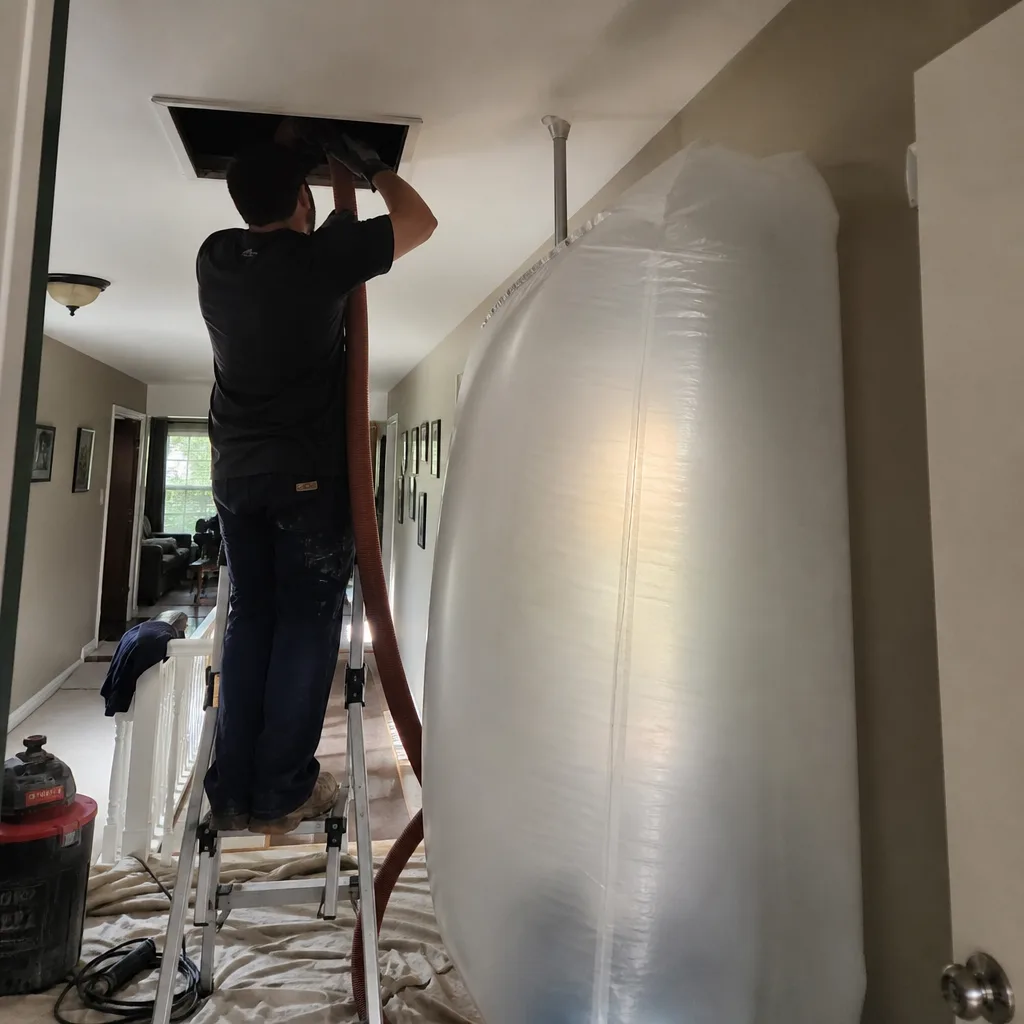
A contractor who has nothing to hide hides nothing. These four documents should be offered proactively or produced immediately upon request. If any are missing, the contractor has not met the threshold for entry into your home.
1. Written Scope of Work
This document defines what will be cleaned, how it will be cleaned, and what is excluded. For a typical Naperville home with a basement furnace and main trunk lines feeding first and second floors, the scope should specify:
- Number of supply registers and return grilles to be accessed and cleaned
- Whether the plenum (the distribution box attached to your furnace) is included
- Whether the blower compartment and evaporator coil are included or addressed separately
- Method of debris removal: negative-pressure extraction, contact vacuuming, or both
- Whether duct access panels will need to be cut, and who restores them
Vague language like “complete system cleaning” without register counts or component names is a warning. CleanRun’s standard scope, delivered under Haven Standard Clause 1, itemizes every duct run by location and specifies the equipment to be used on each.
2. Itemized, Written Price
The price should be a single figure for the agreed scope, not a per-vent rate that expands as vents are counted. Per-vent pricing is the standard mechanism for the $79-to-$800 escalation. The contractor advertises a low per-vent rate, then counts more vents than the homeowner expected, or declares that returns, mains, or the plenum are “additional.”
In Naperville, whole-system air duct cleaning for a typical 2,000 to 3,500 square foot home generally ranges from $400 to $700 for standard residential service. This assumes accessible basement or utility room equipment, standard register counts, and no extraordinary contamination. Prices below this range should trigger immediate scrutiny of what is actually included. Prices significantly above should be justified in writing with specific findings or additional services.
CleanRun’s practice, established in 2013 and applied to all 52,000+ homes served, is to deliver one flat price per system before any panel is removed. There is no “call for a quote” in our process. The number is written, agreed, and fixed.
3. Proof of Liability Insurance
Request a certificate of insurance (COI) naming your property address as the insured location for the date of service. This is standard practice in commercial contracting and should be standard in residential duct cleaning as well. The COI should show general liability coverage of at least $1 million per occurrence. If the contractor hesitates, delays, or offers a verbal assurance instead, this is disqualifying.
4. NADCA Certification or Equivalent Credential
The National Air Duct Cleaners Association (NADCA) maintains the Air Systems Cleaning Specialist (ASCS) certification and the Ventilation Maintenance Technician (VMT) credential. A contractor employing ASCS-certified technicians has demonstrated knowledge of HVAC system hygiene, contamination assessment, and cleaning protocol. Ask for the certificant’s name and NADCA membership number, then verify it at nadca.com.
Not every qualified technician holds NADCA credentials. Alternative indicators include manufacturer training from Abatement Technologies, Guardsman, or Rotobrush, or state-level HVAC contractor licensure where applicable. The key is that the credential can be verified independently, not merely claimed.
How to Verify Equipment on Site Before the Job Begins
The equipment used determines what is actually removed from your ducts. A contractor’s description of their process should match what is on the truck. Here is how to verify that match.
Truck-Mounted vs. Portable Collection Systems
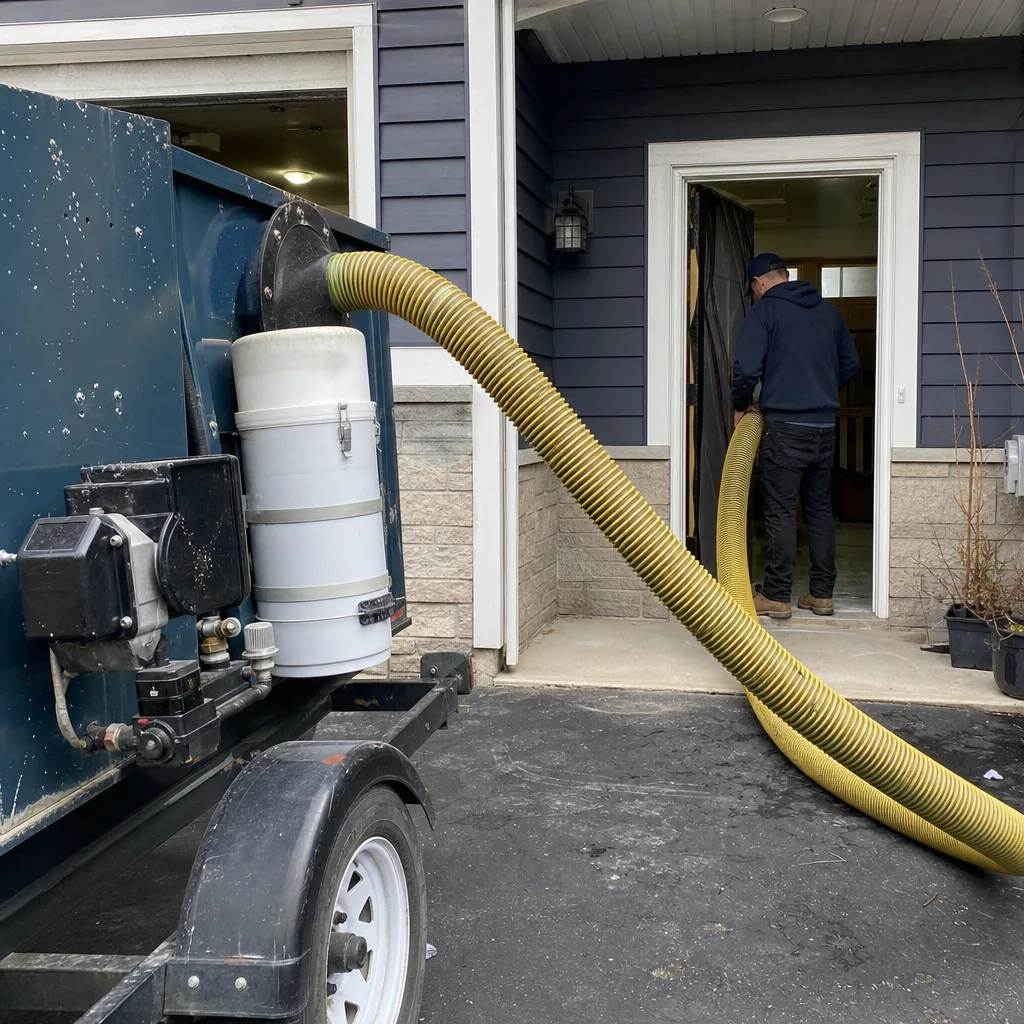
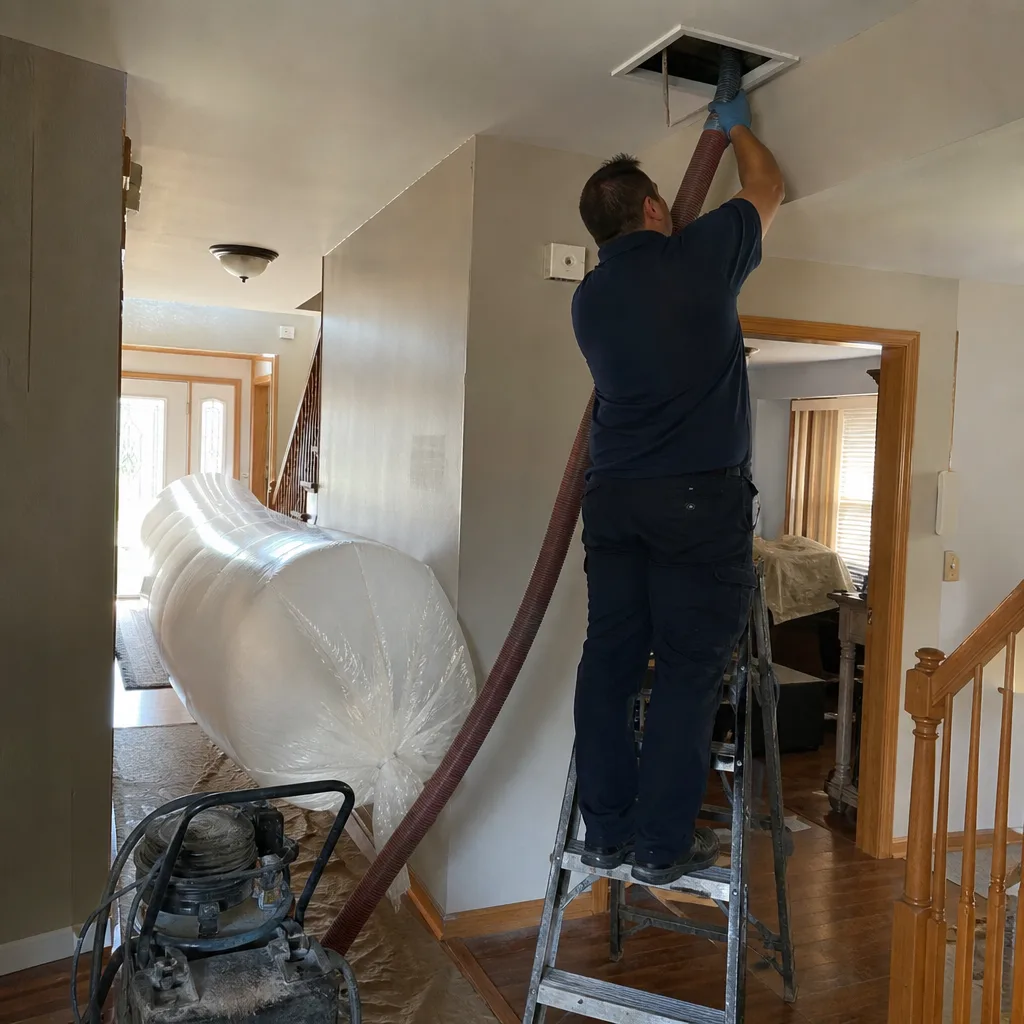
Truck-mounted negative-pressure systems, such as those built on Nikro or Abatement Technologies platforms, generate suction measured in thousands of cubic feet per minute (CFM). The collection unit remains outside your home. A large vacuum hose connects to your duct system at the furnace or at a main trunk access point, creating negative pressure throughout the network. This is the method specified by NADCA for thorough debris removal.
Portable units, including consumer-grade machines and some contractor-grade portables, operate at significantly lower CFM. They are useful for spot cleaning, register-level maintenance, or constrained-access situations. They are not adequate for whole-system cleaning of a Naperville home with full basement trunk lines. A contractor who arrives with only portable equipment for a whole-house job has not brought the right tools.
Before work begins, ask to see the collection unit. If it is truck-mounted, you will see a large cylindrical tank or rectangular box on the vehicle, with a heavy-diameter hose running to your home. If the contractor produces only a rolling portable unit, ask why the truck-mounted system was not deployed. Acceptable answers include physical constraints (no driveway access, steep grade) that you can verify. Unacceptable answers include claims that portable units are “just as effective” for whole-system work.
Agitation Tools
Negative pressure alone does not dislodge debris adhered to duct walls. Agitation tools break that adhesion so suction can remove it. Common professional tools include:
- Rotary brush systems, such as Rotobrush models, with powered brushes sized to duct diameter
- Compressed-air whips and skipper balls that strike duct surfaces without continuous contact
- Contact vacuuming tools for delicate flex duct where brush insertion risks damage
Ask which agitation method will be used on your specific duct types. A contractor who cannot explain the difference between brush and air-whip application, or who has only one tool regardless of duct material, lacks the equipment range for quality work.
Inspection and Documentation Tools
A contractor who photographs the interior of every duct run needs a camera system. This may be a borescope inserted through registers or access points, or a camera mounted on the cleaning equipment itself. Ask when photos are taken (before cleaning, after cleaning, or both), how they are delivered, and whether they are included in the standard job record or billed as an add-on.
CleanRun’s documented photo record, included on every visit since 2013, photographs the interior of every duct run before and after cleaning. These images are delivered as part of the standard job record, not sold separately. A contractor who charges extra for “before and after photos” is charging you to verify their own work.
Red Flags in the First Phone Call
Most problems can be identified before anyone schedules. These patterns, observed in the first contact, predict trouble reliably.
- Refusal to give a firm price. The representative deflects with “we need to see it first” or “every home is different.” While some variation exists, a contractor who has cleaned thousands of Naperville-area homes can describe typical pricing ranges and commit to a written figure after basic qualifying questions. “Call for a quote” is not a business necessity. It is a tactic to get a salesperson into your home.
- Pressure to schedule same-day or “this week only.” Duct cleaning is a scheduled maintenance service, not an emergency. Urgency theater, including claims that mold is spreading or that a slot will disappear, is designed to bypass your vetting process. Legitimate contractors in Naperville book days or weeks ahead and do not penalize you for taking time to decide.
- Inability to name the specific vacuum system or brands used. Ask directly: “What vacuum collection system do your crews use?” A qualified contractor names the manufacturer and model, or describes the truck-mounted vs. portable distinction without prompting. Vague answers like “professional-grade equipment” or “the latest technology” suggest the representative does not know, or the equipment does not justify scrutiny.
- Per-vent pricing with a low base rate. “Only $15 per vent” sounds precise but conceals the total. The contractor counts vents you did not know existed, excludes returns or mains from the “vent” definition, and arrives at a total that exceeds whole-system flat pricing from reputable competitors.
- No mention of documentation or warranty until pressed. A contractor confident in their work leads with their guarantee and their documentation process. One who treats photos and warranties as afterthoughts, or who describes them only when asked, has not built their business around accountability.
What the Contract Should Say About Photography, Completion, and Warranty
The written agreement you sign, or the scope document you acknowledge, should contain specific language on three points. Missing language exposes you to incomplete work, disputed outcomes, and unenforceable complaints.
Photography Requirements
The contract should state that photographs will be taken inside every duct run, before and after cleaning, and delivered to the homeowner as part of the job record. It should specify the delivery format (digital gallery, email attachment, printed report) and timeline. Language like “photos available upon request” is insufficient. The commitment must be automatic, not opt-in.
CleanRun’s documented photo record is standard on every job, not an optional add-on. Haven Standard Clause 1 requires the written scope; associated documentation protocols require the photo record. Homeowners in Naperville receive these images as a matter of course, with no additional signature or fee.
Job Completion Criteria
The contract should define “clean” in measurable or observable terms. Examples include:
- Visual inspection through borescope shows no debris accumulation exceeding a specified thickness
- Post-cleaning photos show removal of pre-cleaning debris at every photographed location
- No obstruction remains that would impede airflow beyond manufacturer specifications
Avoid contracts that define completion as “when the technician determines the work is done” or that lack any reference to inspection standards. Subjective completion criteria are no criteria at all.
Warranty Terms
The warranty should state its duration, what it covers, and the mechanism for making a claim. Key elements:
- Duration in days or years (CleanRun’s 365-Day Done Right Promise specifies 365 days from service date)
- Coverage scope: re-cleaning, repair of damage caused by cleaning, or correction of incomplete work
- Claim process: who to contact, expected response time, and whether re-service requires additional payment
- Written confirmation that the warranty is backed by the company, not subject to manager discretion
A warranty described only in marketing materials, without appearing in the signed agreement, is not a warranty. It is advertising. The 365-Day Done Right Promise appears in writing on every CleanRun job record, not merely on the website.
How to Get a Second Opinion Without Paying Twice
Sometimes the concern arises after the first contractor has already visited. The technician reports mold, collapsed ductwork, or dangerous contamination. The quoted price jumps. You are unsure whether the findings are genuine or manufactured.
The correct response is a second opinion from a contractor with no financial connection to the first. CleanRun offers a Free Second Opinion on any written estimate: bring a competitor’s written scope and price, and CleanRun will inspect your system independently and provide its own written assessment at no cost. This is not a price-matching program. It is a separate evaluation, and the two scopes can be compared directly.
When seeking a second opinion independently, follow this process:
- Request the first contractor’s findings in writing, with photos if they claim visual evidence
- Do not authorize additional work from the first contractor while awaiting the second opinion
- Contact a second contractor, describe the situation, and request an independent inspection with its own photo documentation
- Compare the two written scopes for consistency in findings, divergence in recommended work, and difference in pricing structure
- If the second contractor disagrees with the first, ask each to explain the discrepancy in writing
Genuine findings, such as visible mold or detached ductwork, are reproducible. A second qualified inspector will identify the same conditions. Findings that disappear under independent inspection were likely never present.
Naperville-Specific Considerations: Climate, Codes, and Common Issues
Naperville’s climate and housing stock create specific conditions that affect duct cleaning needs and contractor selection; our Seasonal Air Duct Cleaning Care for Naperville: Year-Round Homeowner’s Guide covers how timing matters.
Climate and Seasonal Patterns
Naperville experiences significant seasonal humidity variation, with summer dew points regularly reaching uncomfortable levels and winter air that is extremely dry. This pattern drives two common duct issues:
- Summer humidity can promote condensation in cool ductwork, particularly in unconditioned basement runs, creating conditions for microbial growth on debris accumulations
- Winter heating seasons produce thermal cycling that stresses duct seals, particularly at flex duct connections, leading to leakage that draws in attic or crawl space air
A contractor working in Naperville should ask about your humidity control (whole-house dehumidifier, humidifier, or neither) and should inspect duct seals as part of the cleaning assessment. Duct cleaning without seal inspection addresses symptoms while ignoring a common cause.
Housing Stock and Construction Era
Homes in the Ashwood Heights, Tall Grass, and Stillwater developments, built primarily from 2015 to 2025, often have complex duct layouts with multiple zones, flex duct branch runs, and tightly sealed construction that reduces natural air exchange. These homes accumulate construction debris more readily than older, leakier structures, and they are less forgiving of duct leakage because the building envelope does not provide accidental ventilation.
Older Naperville neighborhoods, including parts of East Highlands and the original downtown grid, may have galvanized steel ductwork from mid-20th-century construction. This material can corrode internally, and aggressive brushing may damage thin or rusted walls. A contractor should identify duct material before selecting agitation tools.
Local Permit and Code Context
Air duct cleaning itself does not require a permit in Naperville. However, duct modification, including the cutting of access panels that are not properly restored, may trigger inspection requirements if discovered. Contractors should restore access panels to code-compliant condition, using materials and methods that maintain fire ratings where required. Ask how access panels are closed: sheet metal patches with screws, or tape and hope?
Common Mistakes to Avoid
- Choosing by coupon price alone. The $79 offer is not a loss leader. It is a revenue model built on upselling work of uncertain value. In Naperville’s competitive market, legitimate whole-system pricing starts around $400. Anything substantially below that is not comparable service.
- Accepting verbal promises about documentation. “We’ll take photos” means nothing until the delivery method and timing are specified in writing. The same applies to warranties, completion criteria, and price guarantees.
- Neglecting to verify insurance. A contractor who damages your HVAC system or home finishes without adequate coverage leaves you with a claim against your own homeowner’s policy. Request the COI before scheduling.
- Assuming all duct cleaning includes the same components. Some contractors clean only registers and visible trunk lines, omitting the plenum, blower compartment, and returns. The scope document should list every component to be addressed.
- Failing to ask about flex duct experience. Naperville’s newer homes rely heavily on flex duct. A contractor experienced only with rigid metal may damage flexible walls or fail to clean them effectively. Ask specifically about flex duct technique.
- Ignoring the warranty’s written terms. A “satisfaction guarantee” with no defined duration, no stated coverage, and no claim process is not a warranty. It is a phrase. Read the actual language.
- Scheduling without checking equipment. The difference between truck-mounted negative-pressure extraction and portable vacuuming is the difference between debris removal and debris redistribution. Confirm what will be on site.
When to Call a Professional
Schedule a professional inspection when you observe visible dust emission from registers, persistent musty odors when the system runs, uneven heating or cooling that suggests blockage, or after any renovation that generated significant dust. In Naperville’s newer homes, construction debris from the build process may remain in ducts for years, slowly distributing into living spaces.
Do not attempt to access or clean ductwork yourself. The sheet metal edges of duct access points are sharp. Components near the furnace, including the plenum and blower, involve electrical and mechanical hazards. Work above ceiling height requires proper ladder safety and fall protection. These are trained technician tasks.
CleanRun Air Duct Cleaning Naperville offers free estimates in Naperville. Every estimate includes a written scope and price before any work begins, documented photo records of every duct run, and the 365-Day Done Right Promise backed in writing. Call (331) 236-5490 to schedule.
Frequently Asked Questions
Whole-system air duct cleaning for a typical Naperville home of 2,000 to 3,500 square feet generally ranges from $400 to $700, depending on system accessibility, register count, and contamination level. Prices significantly below this range typically exclude components or use inadequate equipment. Call (331) 236-5490 for a written estimate with no obligation.
Low quotes usually rely on per-vent pricing that expands during the visit, portable equipment that cannot clean main trunk lines, or exclusion of returns, plenums, and blowers from the stated price. The final invoice after a $79 coupon often exceeds $500. A written, itemized, flat price for the complete system prevents this escalation.
Demand a documented photo record of every duct run, before and after cleaning, delivered as part of the standard job record. Visual inspection of registers is not sufficient; debris accumulates in trunk lines and plenums that are not visible from living spaces. Without photos, you have only the technician’s word.
NADCA recommends cleaning every three to five years for typical residential systems, or more frequently after renovations, pest infestations, or water damage. In Naperville, homes in newer developments with flex duct may benefit from initial cleaning within the first two years to remove construction debris. The camera inspection, not the calendar, should drive the decision.
NADCA, the National Air Duct Cleaners Association, certifies technicians through the Air Systems Cleaning Specialist (ASCS) credential and the Ventilation Maintenance Technician (VMT) program. Certification indicates training in HVAC hygiene, contamination assessment, and proper cleaning protocol. It is not legally required, but it is an independently verifiable standard that separates trained professionals from equipment renters.
No. Residential duct systems contain sharp metal edges, electrical components near the furnace, and access challenges at height. Agitation without proper negative-pressure collection disperses debris into your home rather than removing it. The safety and efficacy risks outweigh any cost savings. This is a trained technician service.
The Bottom Line
Hiring an air duct cleaning contractor in Naperville is a documentation problem disguised as a service purchase. The right contractor produces four documents before starting: a written scope, an itemized price, proof of insurance, and verifiable credentials. They use truck-mounted negative-pressure extraction with appropriate agitation tools, not portable equipment marketed as equivalent. They photograph every duct run automatically, include those photos in the standard job record, and back their work with a written warranty of defined duration and process. The wrong contractor obscures one or more of these elements, substitutes urgency for transparency, and leaves you with work you cannot verify. Ask the questions. Demand the documents. Inspect the equipment. The fifteen minutes spent on vetting prevents the far longer problem of paying for duct cleaning that never happened.
Written by Tomas Reyes, Owner at CleanRun Air Duct Cleaning Naperville, serving Naperville since 2013.