
Last updated September 23, 2026
Whole-system duct and dryer vent check with before-and-after photos - you see exactly what came out of your vents
That "$99 whole-house special" is a bait ad - the real number appears once they are in your hallway, or the "clean" is a shop-vac at the register. We photograph the inside of your ducts before and after instead.
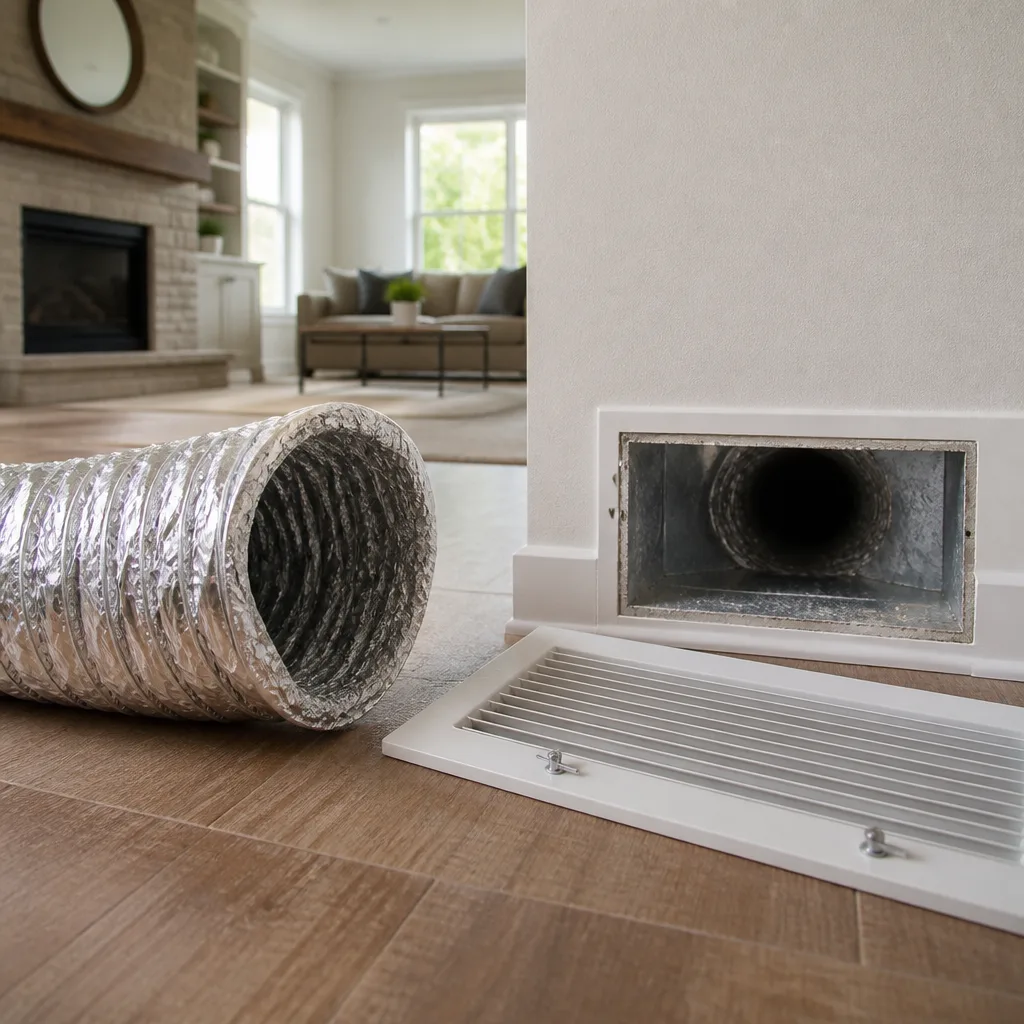
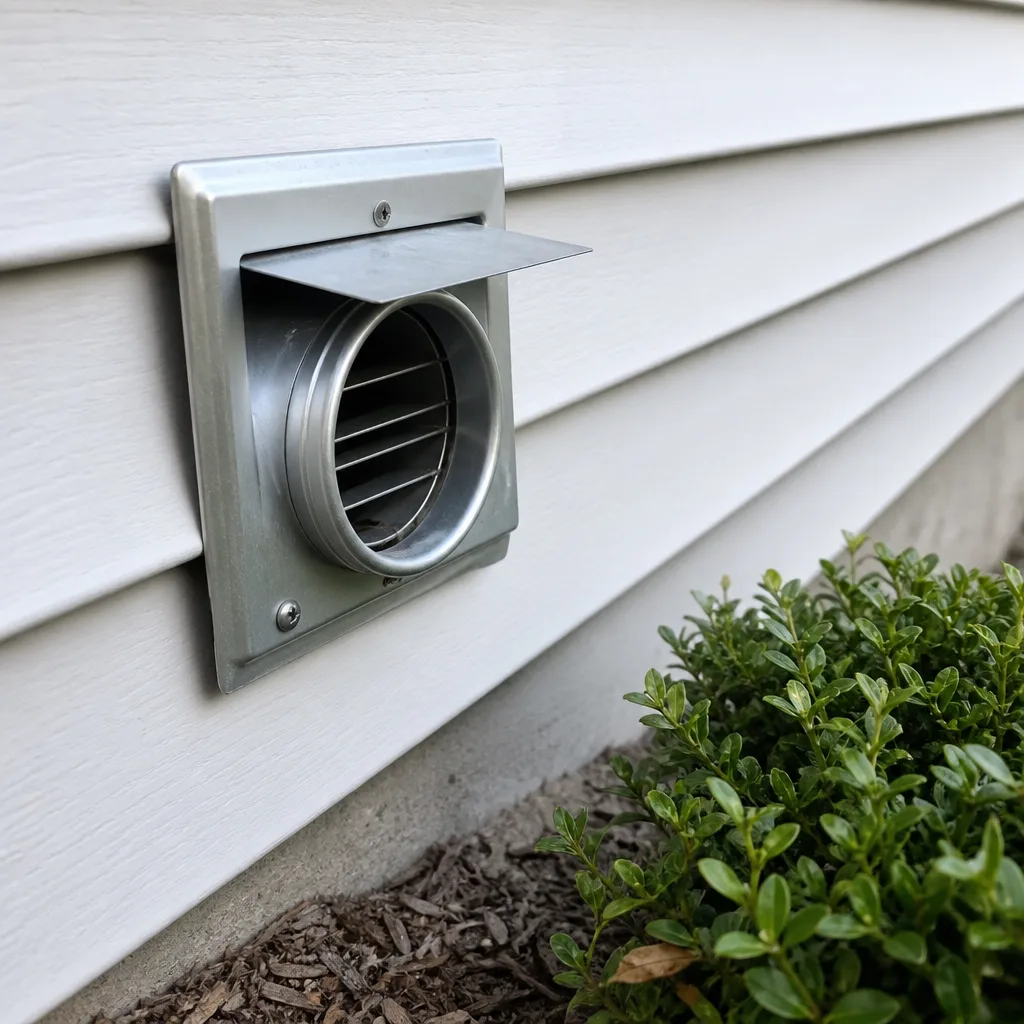
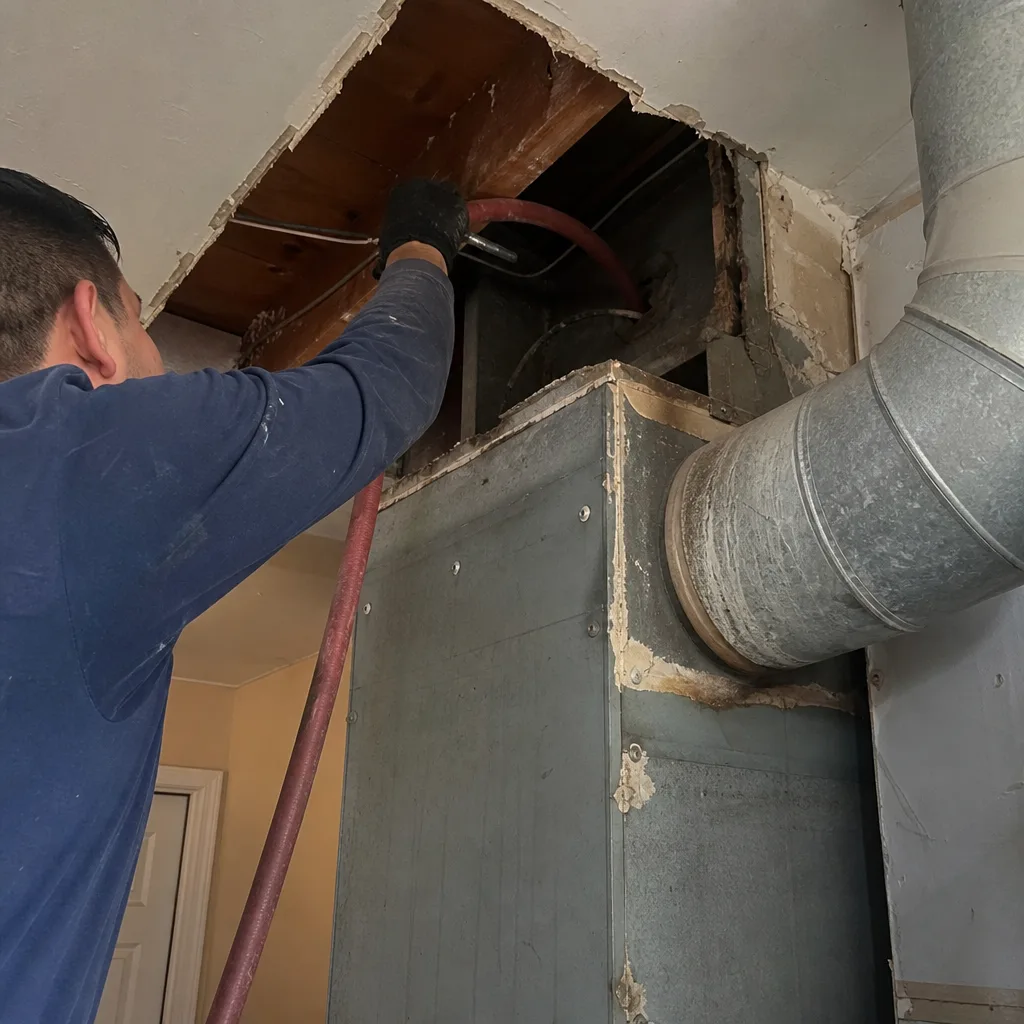 Before
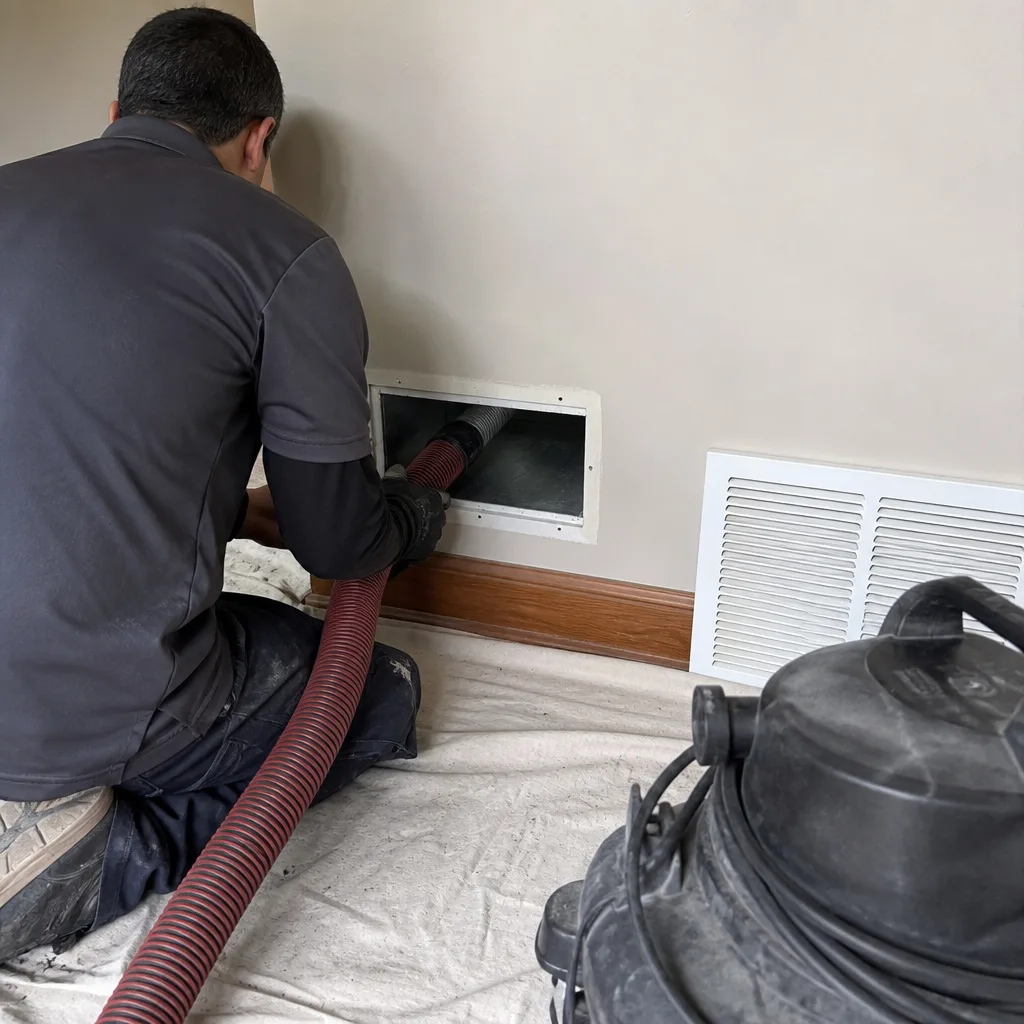 After
After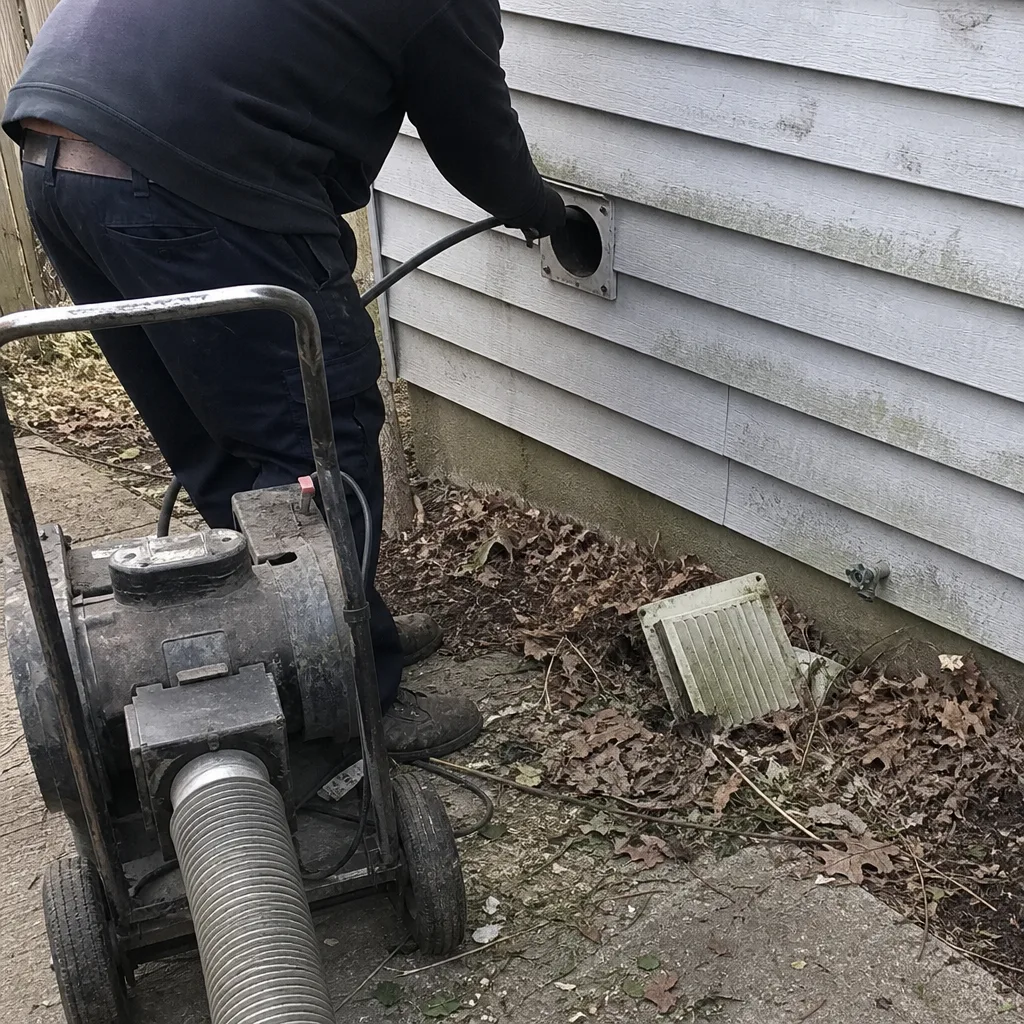 Before
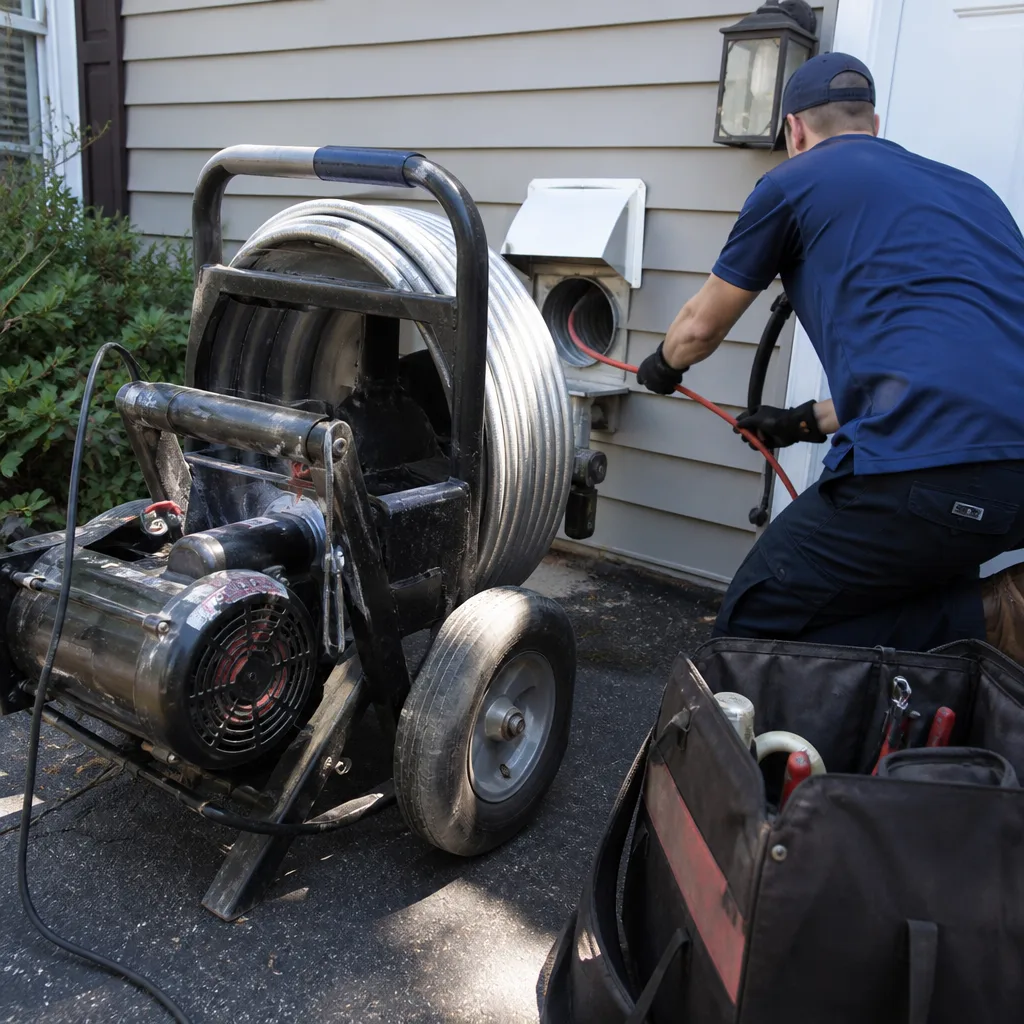 After
After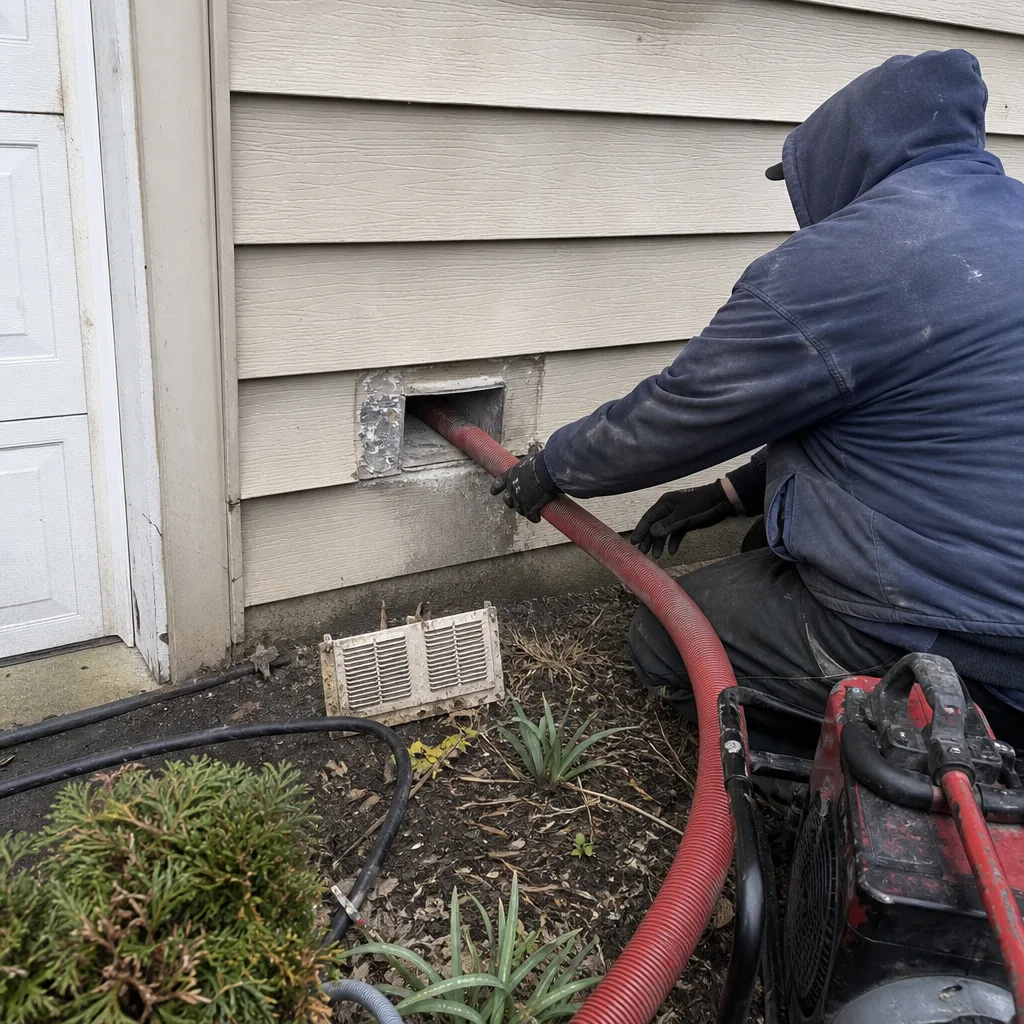 Before
 After
AfterThe Complete Guide to Air Duct Cleaning in Naperville
A shop-vac generates noise that sounds like cleaning. A negative-pressure vacuum collection unit generating 4,000-8,000 CFM is what actually removes debris from a sealed duct system - and most Naperville homeowners have no way to tell the difference from the other room. In twelve years of documented work across Naperville, from the 1980s split-levels near Naper Boulevard to the new construction south of 95th Street, we’ve learned that homeowners don’t need more awareness about air duct cleaning. They need a factual baseline: what’s actually inside a typical duct system after 5, 10, or 15 years, what our Air Duct Cleaning services look like step by step, and what documentation proves the work was done. This guide is that baseline.
Quick Answer
Professional air duct cleaning in Naperville removes accumulated debris from your entire HVAC duct system using negative-pressure extraction equipment, typically costing $450-$950 for a complete residential job depending on home size and duct configuration, a topic covered in depth in our DIY vs Professional Air Duct Cleaning: The Naperville Homeowner’s Decision Guide. A legitimate cleaning includes source removal from every duct run, contact vacuuming of the air handler compartment, register cleaning, and a documented photo record of before-and-after conditions inside the ducts. The process takes 3-5 hours for a typical Naperville home and should leave you with written proof of what was found and what was removed.
Table of Contents
- What Duct Cameras Actually Show Inside Naperville Homes
- Negative-Pressure Systems vs. Shop-Vacs: The Mechanical Difference
- The Complete Cleaning Process: Steps That Get Skipped on Cheap Jobs
- What Before-and-After Photographs Should Actually Prove
- Realistic Air Duct Cleaning Prices in Naperville
- How Often Naperville Homes Actually Need Duct Cleaning
- Choosing a Duct Cleaning Company in Naperville
- Common Mistakes to Avoid
- When to Call a Professional
- Frequently Asked Questions
BeforeAfterWhat Duct Cameras Actually Show Inside Naperville Homes
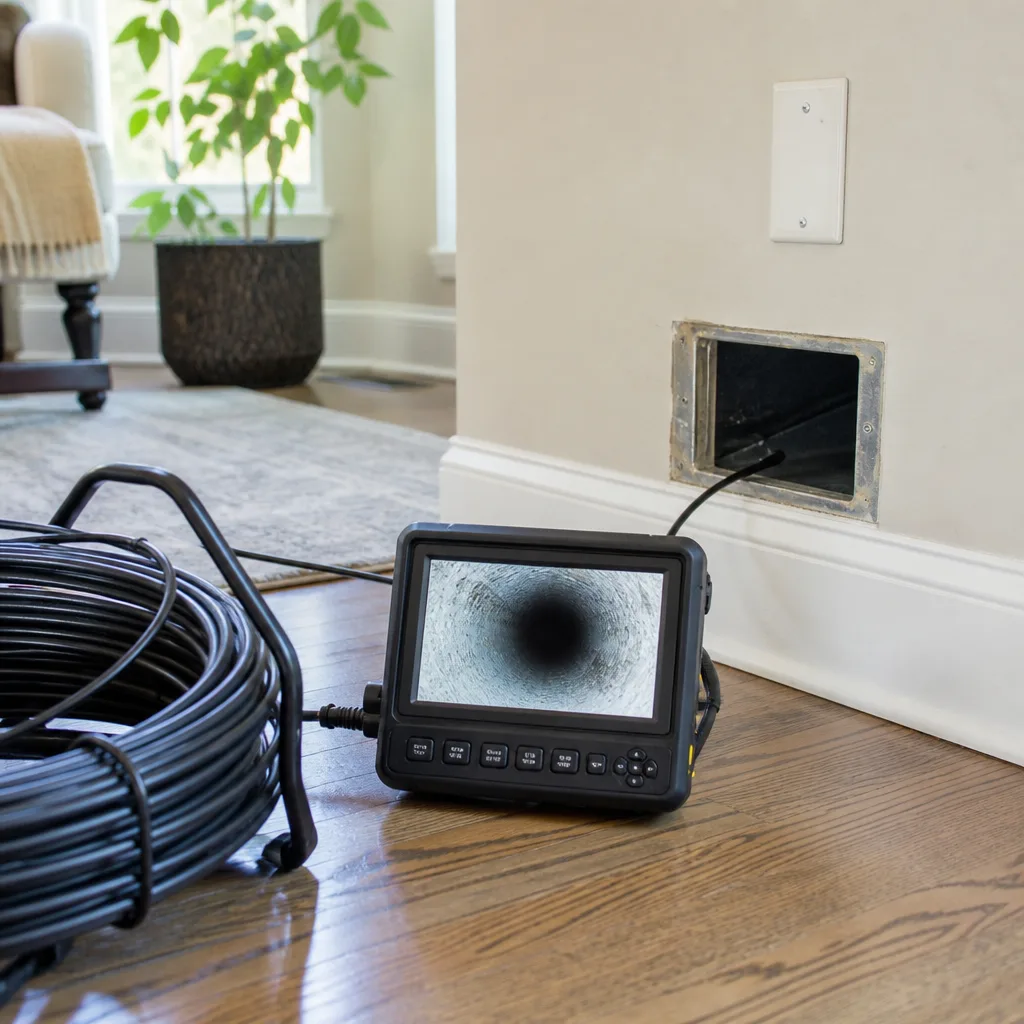
We attach a borescope camera to a flexible rod and feed it through every duct run we clean. The images go onto a tablet, then into the customer’s job record. After 52,000 homes, we’ve seen patterns that map directly to construction era and neighborhood.
Pre-2000 builds in central Naperville - the subdivisions near Downtown, East Highlands, and the original Cress Creek areas - frequently show fiberglass duct liner shedding. The liner was standard practice in the 1970s through 1990s to absorb noise and provide thermal insulation. Over decades, the binder breaks down. The camera shows fuzzy gray material coating the duct floor, sometimes 1/4 inch thick, intermixed with dust and hair. This isn’t ordinary household dust. It’s structural material degrading inside the airway. In a 1987 colonial near Hobson Road, we photographed a 3-inch debris build-up at the first elbow downstream of the air handler, composed of degraded liner, construction debris left from the original build, and 35 years of accumulated particulate.
Homes built 2000-2015, common in the Ashbury and Tall Grass areas, tend toward different problems. Flexible ductwork (flex) became dominant, and the camera often reveals sagging runs where the flex has pulled away from supports, creating low points where debris collects. We also find incomplete seals at connections - the result of rushed production building during Naperville’s rapid growth years. The debris is typically finer: drywall dust from the original construction that was never fully removed, combined with standard household particulate.
New construction since 2015, particularly in south Naperville developments like Stillwater and Tamarack, presents a counterintuitive finding. The ducts are often the dirtiest at move-in. Construction-phase HVAC systems run without filtration during drywall sanding and finishing. We’ve photographed ducts in 2022 builds with 1/2 inch of fine white drywall compound coating the entire horizontal run. The homeowner moved in three months prior and had been breathing that residue every time the system cycled.
Naperville’s climate amplifies certain conditions. Our freeze-thaw cycles create more foundation settling than in warmer markets, and that settling stresses duct connections in slab-on-grade homes. The camera sometimes reveals separated joints that have been pulling conditioned air into the crawl space for years, while drawing in unconditioned, particle-laden air from construction cavities.
Negative-Pressure Systems vs. Shop-Vacs: The Mechanical Difference
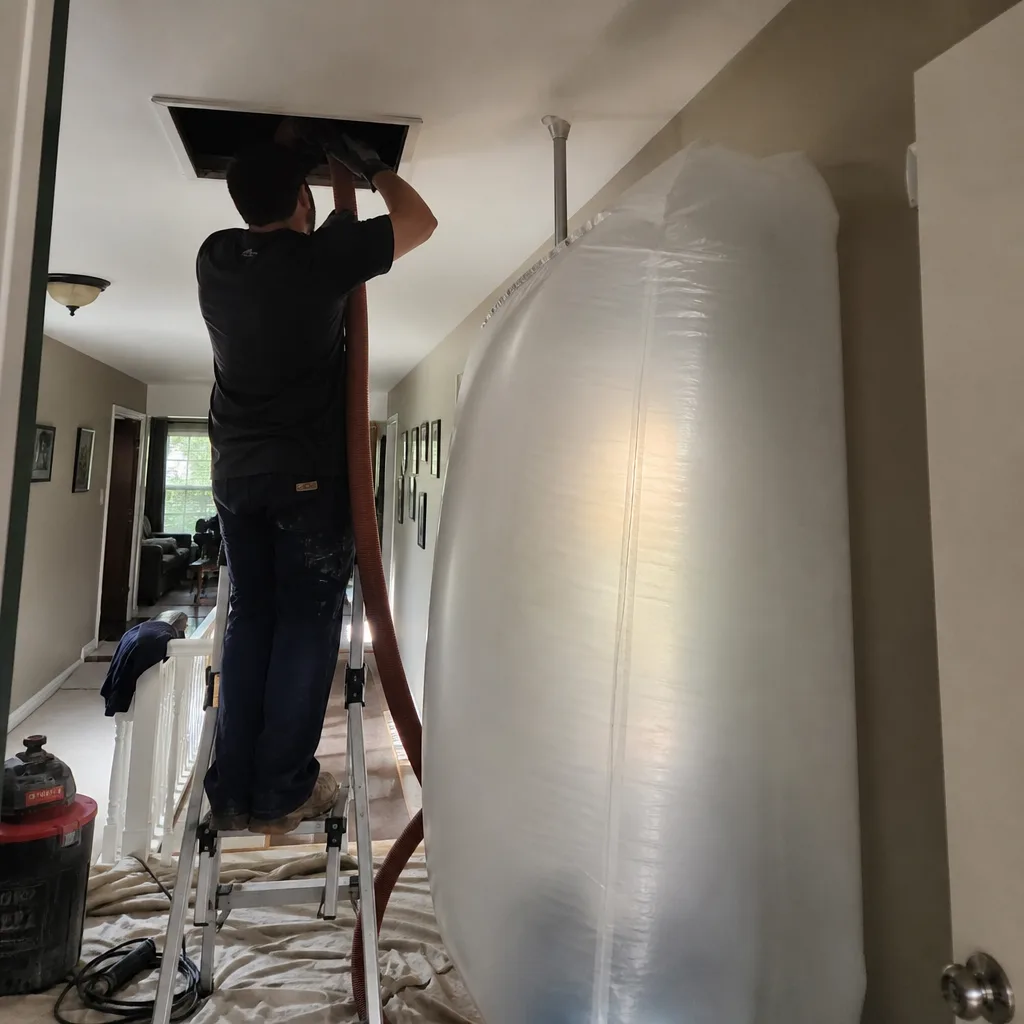
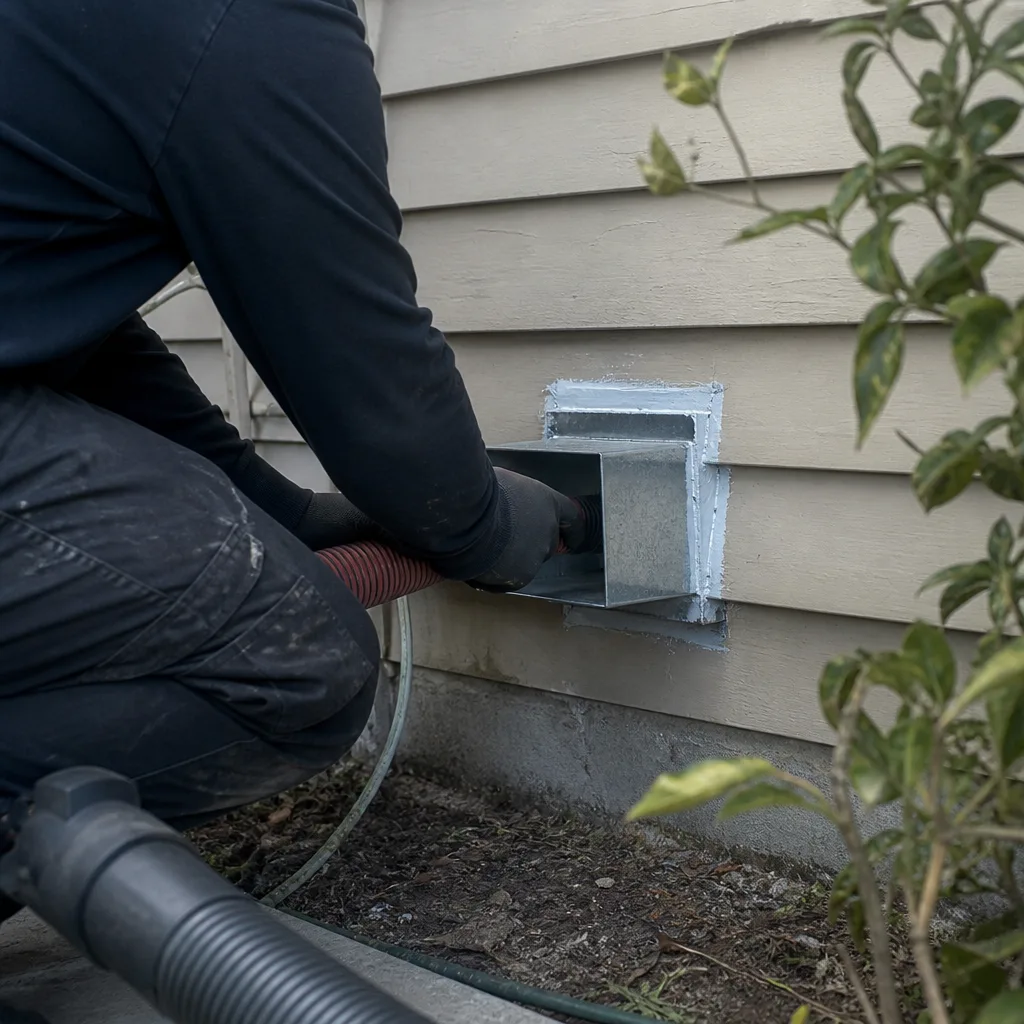
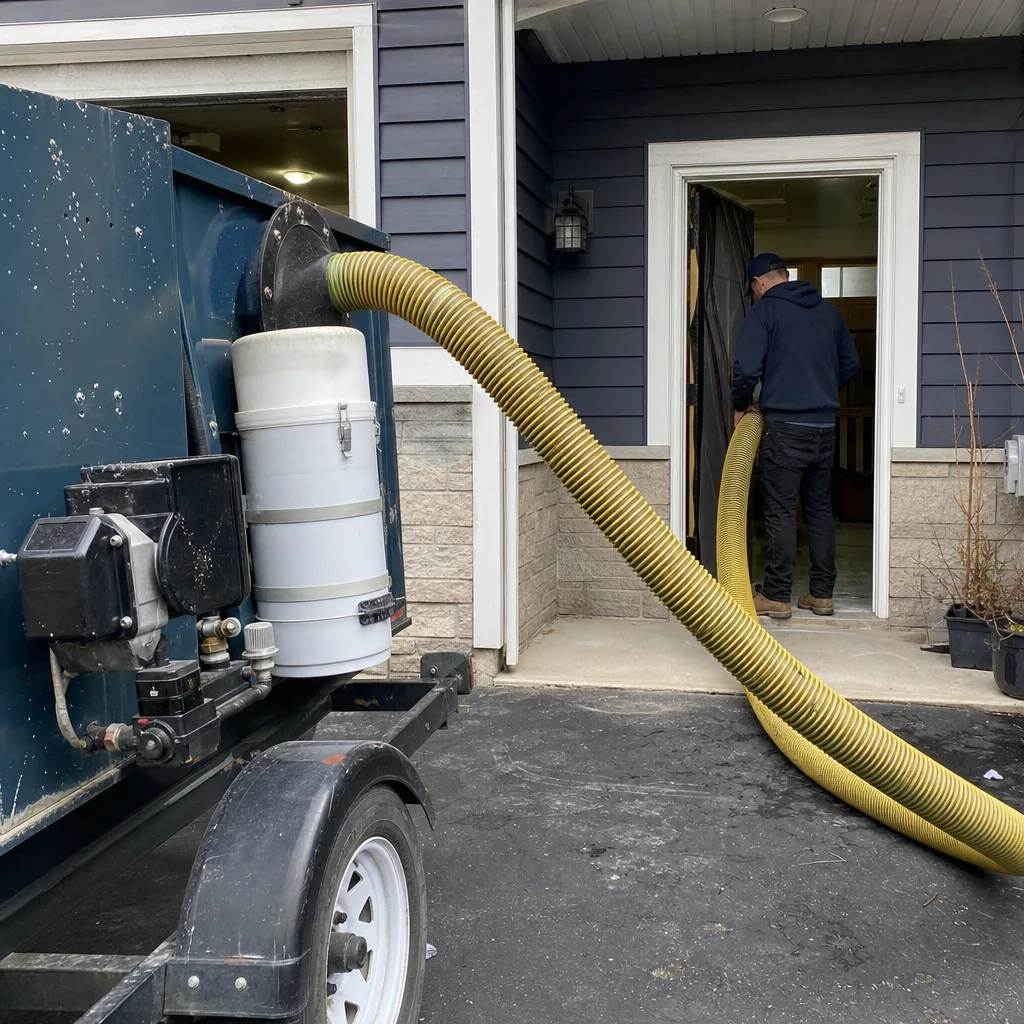
The equipment used determines whether debris leaves your duct system or simply gets rearranged. This is the technical distinction most $79 coupon operations hope you never investigate.
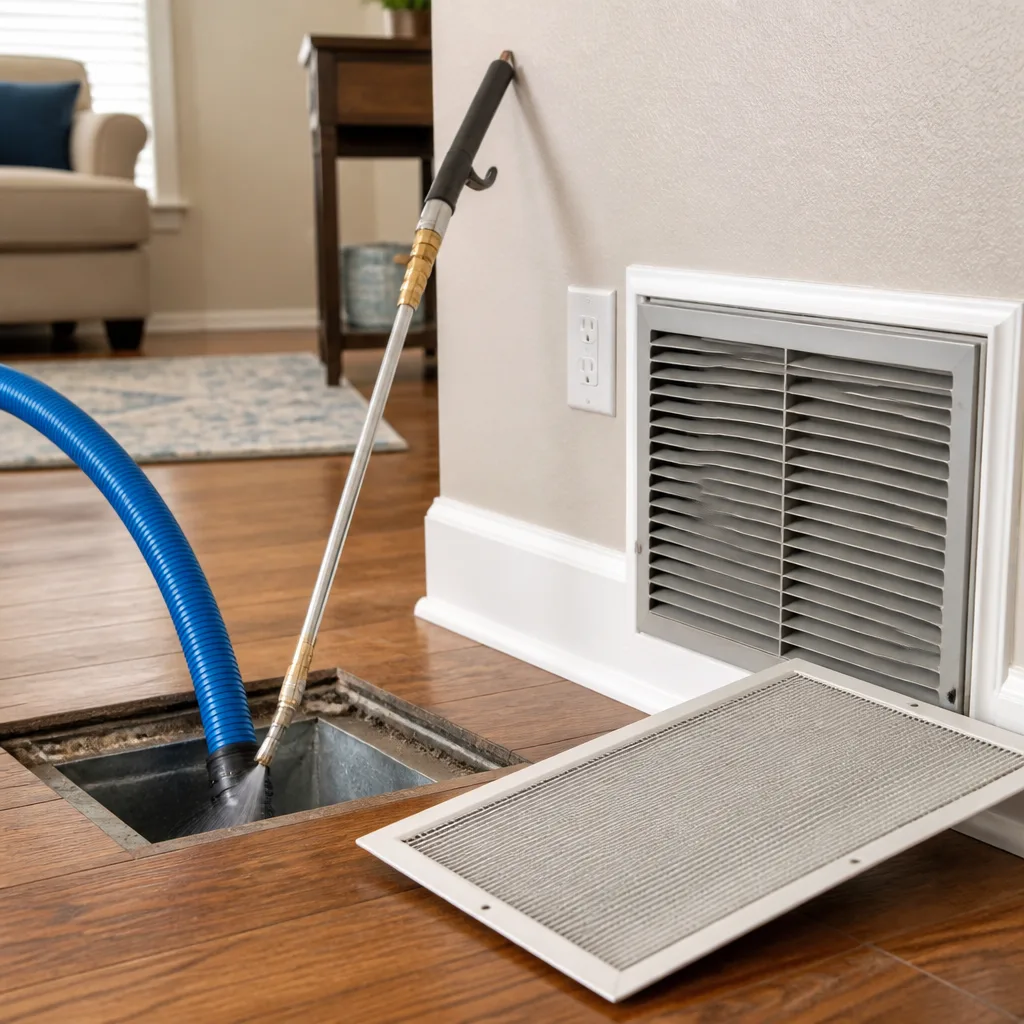
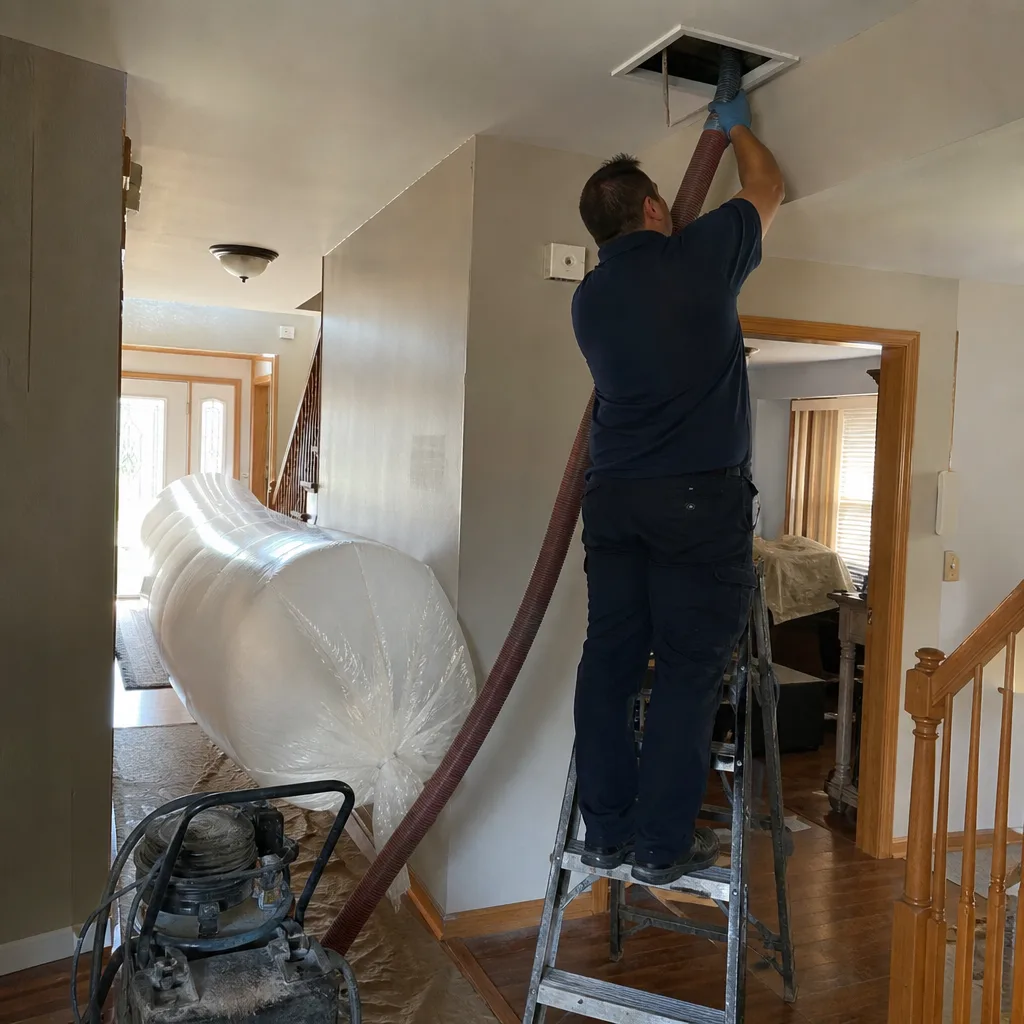
Negative-pressure vacuum collection units - the equipment CleanRun deploys on every job - are engineered specifically for duct cleaning. These units, from manufacturers like Nikro and Abatement Technologies, connect to your duct system via an 8-inch or 10-inch hose at a central access point, typically near the air handler. The unit’s blower generates 4,000-8,000 CFM (cubic feet per minute) of suction, pulling the entire duct system under negative pressure. This means air flows inward through every register and duct run, toward the collection unit. Debris is carried by that airflow into a HEPA-filtered collection chamber, not into your home.
The critical specification is CFM. A unit rated below 3,000 CFM cannot maintain adequate negative pressure across a typical Naperville home’s duct system, which may total 150-300 linear feet of ductwork. The pressure drops at distant registers, and debris remains. You can verify any company’s equipment: ask for the CFM rating of their vacuum unit. If they don’t know, or if they quote a number below 3,000 CFM, the physics don’t support their claims.
Portable shop-vac units - the equipment behind most coupon operations - typically generate 100-200 CFM. They’re useful for spot cleaning a single register or collecting debris during duct repair work. They cannot create negative pressure across a whole system. The operator runs a brush or whip through individual ducts, and the shop-vac sits at the register mouth, catching some fraction of what the agitation dislodges. The rest settles deeper in the duct, or blows out other registers when the system restarts.
The acoustic difference is what Naperville homeowners actually experience. A negative-pressure unit produces a sustained low-frequency rumble, like a distant diesel generator, as it pulls air through the entire system for 3-4 hours. A shop-vac produces intermittent high-pitched whine as the operator moves from register to register. If your duct cleaning appointment is over in 45 minutes and sounded like a vacuum cleaner, you received the latter.
CleanRun’s equipment roster includes Nikro and Abatement Technologies negative-pressure units, supplemented by Rotobrush contact cleaning systems for register assemblies and air handler compartments. These are trade-recognized brands with published specifications any homeowner can verify.
The Complete Cleaning Process: Steps That Get Skipped on Cheap Jobs
A complete residential air duct cleaning has four mandatory phases. The $79 coupon model typically completes one, sometimes two, and calls the job done. Here’s what each phase involves and what equipment it requires.
Phase 1: Source Removal from Every Duct Run
The technician seals all registers except one, connects the negative-pressure vacuum to a central access point, and uses mechanical agitation tools - compressed-air whips, rotary brushes, or skipper balls - to dislodge debris from the duct walls. The dislodged material is immediately drawn into the vacuum stream. This process repeats for every supply and return duct run. A typical Naperville home has 12-20 runs. Each run takes 15-25 minutes. The phase cannot be rushed without leaving debris behind.
What gets skipped: Coupon operations often clean only “the main trunk” - the large central ducts - and ignore the branch runs to individual rooms. Or they run a brush through without negative pressure, leaving debris loose in the system.
Phase 2: Contact Vacuuming of the Air Handler Compartment
The air handler - the furnace or air conditioner cabinet containing the blower, heat exchanger, and evaporator coil - is opened and vacuumed with a HEPA-contact vacuum. This is not the same equipment used on the ducts. The blower compartment accumulates debris that bypasses the filter, and this debris recirculates immediately after any duct cleaning if not removed. The evaporator coil, if accessible, is inspected for contamination that would require separate cleaning.
What gets skipped: Many operators never open the air handler. “We don’t do furnaces” is a common excuse. But the blower compartment is part of the air circulation path. Cleaning ducts while leaving the blower dirty is like washing your car’s exterior without opening the doors.
Phase 3: Register Cleaning and Reassembly
Each register and grille is removed, washed, and dried. The boot - the sheet-metal transition between register and duct - is vacuumed and brushed. Registers are reinstalled with proper alignment and secure fasteners. In Naperville’s older homes, we often find painted-shut registers that have never been removed; forcing them damages the surrounding drywall, so we cut paint seals carefully and note any damage in the job record.
What gets skipped: Registers are wiped with a rag while still in place, or not touched at all. The boot, a common debris collection point, is ignored.
Phase 4: System Testing and Documentation
The system is reassembled, filters are inspected or replaced (if customer-supplied or purchased), and the HVAC system is run through a complete cycle to verify normal operation. The technician documents the work: photographs of conditions inside representative duct runs, the written scope completed, and any recommendations for additional services (duct repair, coil cleaning, filter upgrades).
What gets skipped: No photographs, no written record, no system test. The truck leaves, and the homeowner has no evidence the work occurred.
CleanRun’s process follows all four phases on every job, documented under Haven Standard Clause 1: Written Price Before Work, and Haven Standard Clause 4: Documented Completion. The photo record includes every duct run, not a representative sample, and is delivered as part of the standard job record.
What Before-and-After Photographs Should Actually Prove
A company that cannot show you photographs from inside your specific duct system cannot prove any work was completed. This is not a marketing position. It’s a logical fact.
The photographs should show:
- Location identification: Each image is tagged with the register location (e.g., “Master Bedroom, North Wall”) so you can verify which duct run is depicted. A generic “before” and “after” with no location data could come from any home.
- Consistent camera position: The before and after images are taken from the same insertion point, looking in the same direction, at the same focal distance. This allows direct comparison. Images from different angles or distances are not comparable.
- Visible duct structure: You should see the duct walls, joints, and any features (dampers, turning vanes) to confirm the camera was actually inside your ductwork, not pointed at a dirty surface elsewhere.
- Debris removal evidence: The after image shows clean duct walls with no visible accumulation. In fiberglass-lined ducts, the after image shows intact liner with loose debris removed - the liner itself remains, as removing it would damage the duct.
- Timestamp or sequence data: The images are part of a continuous record, not selected highlights. CleanRun’s photo record includes every duct run, delivered as a digital album with the job invoice.
We’ve encountered competitors who show customers stock photographs downloaded from manufacturer websites, or images so generic they could depict any rectangular metal box. Ask specifically: “Will I receive photographs from inside my ducts, with register locations noted, for every run you clean?” If the answer is qualified or delayed, the documentation does not exist.
The photo record serves a second purpose beyond proof of work. It establishes baseline condition for future comparison. When a Naperville homeowner calls us back in five years, we can reference the prior images and identify new issues: duct settlement, new construction debris from a renovation, or filter maintenance failures.
Realistic Air Duct Cleaning Prices in Naperville
The $79 coupon is not a price. It is a customer acquisition cost for a bait-and-switch operation. The actual invoice, once the technician is in your home and has identified “mold” or “extra vents” or “main line blockage,” typically runs $400-$800. The homeowner pays more than a legitimate upfront price, and receives inferior work.
CleanRun operates under Haven Standard Clause 1: Written Price Before Work Starts. The price is established during the initial assessment, documented in writing, and agreed before any equipment is unpacked. There is no per-vent pricing, no surprise add-ons, and no “technician’s discretion.”
Here are realistic price ranges for complete residential air duct cleaning in Naperville, based on home characteristics we encounter in this market:
| Home Size / Type | Typical Duct Configuration | Price Range |
|---|---|---|
| 1,200-1,800 sq ft, ranch or split-level (pre-1990) | 8-12 runs, metal duct with possible fiberglass liner | $450-$650 |
| 2,000-2,800 sq ft, two-story (1990-2010) | 14-18 runs, mixed metal and flex | $650-$850 |
| 3,000-4,500 sq ft, newer construction or custom | 18-26 runs, extensive flex, zoning dampers | $850-$1,200 |
| Additional services (if needed) | Dryer vent cleaning, coil cleaning, sanitizing | $150-$350 per service |
Factors that increase price legitimately:
- Fiberglass liner degradation: Pre-2000 homes with shedding liner require slower, more careful agitation to remove debris without damaging the liner further. This extends labor time.
- Accessibility constraints: Crawl space ductwork, attic runs in summer, or finished basement ceilings that require register removal through drywall.
- System contamination severity: Construction debris, pest intrusion, or long-term filter neglect can require additional agitation cycles.
- Duct repair needs: Disconnected joints, damaged flex, or failed seals identified during cleaning that should be addressed to prevent recontamination.
Factors that should NOT increase price after the written quote:
- “You have more vents than we counted” - register count is visible from outside the home.
- “The main line needs special treatment” - main trunk cleaning is part of complete service.
- “Mold requires EPA treatment” - legitimate mold assessment requires laboratory analysis, not visual speculation by a duct cleaner.
CleanRun provides free written estimates in Naperville. The estimate includes the exact scope, the fixed price, and what documentation you will receive. Call (331) 236-5490 to schedule.
How Often Naperville Homes Actually Need Duct Cleaning
The industry standard recommendation of “every 3-5 years” is a generalization that ignores construction era, household composition, and local conditions. Our documented experience in Naperville suggests a more specific framework, with more guides & resources available on our blog.
Post-construction cleaning: Essential for any home occupied within 12 months of substantial completion. The drywall compound, sawdust, and general construction debris we photograph in new Naperville builds makes this non-optional. Schedule before move-in if possible, or within the first six months of occupancy.
Pre-2000 homes with fiberglass liner: Every 4-6 years, with camera inspection at year 3 to assess liner condition. The degradation is progressive and accelerates as the binder ages. In neighborhoods like East Highlands and the original Cress Creek subdivisions, we’ve found liner shedding becomes significant at 15-20 years post-installation.
Standard residential, good filter maintenance: Every 5-7 years. “Good filter maintenance” means MERV 8 or higher filters changed at manufacturer-recommended intervals, with no extended periods of system operation without filtration.
Homes with specific risk factors: More frequent cleaning indicated for households with heavy pet dander, residents with respiratory conditions, recent renovations, or water intrusion events that may have introduced particulate or microbial growth into the system.
Naperville’s pollen seasons - particularly the tree pollen surge in April and May, and ragweed in August and September - load filters heavily. Homeowners who run systems continuously during these periods without filter changes accelerate duct contamination. The debris doesn’t disappear when the season ends; it migrates past overloaded filters into the duct system.
We do not recommend “annual duct cleaning” for typical households. It’s unnecessary expense without corresponding benefit, and frequent mechanical agitation stresses duct connections and liner. The exception is commercial environments or homes with specific medical requirements, which we assess individually.
Choosing a Duct Cleaning Company in Naperville
The Naperville market includes national franchise operations, independent contractors, HVAC companies adding duct cleaning as a sideline, and dedicated specialists. Here’s how to distinguish legitimate providers from the rest, as detailed in our How to Hire a Air Duct Cleaning Contractor in Naperville: A Step-by-Step Guide.
Verify equipment specifications. Ask for the CFM rating of their vacuum collection unit. Ask whether it’s truck-mounted or portable. Ask the brand names. Legitimate operators know these details without hesitation. CleanRun uses Nikro and Abatement Technologies negative-pressure units, with specifications published by the manufacturers and verifiable online.
Demand documentation commitment in writing. Not “we take photos” - ask whether you will receive a photo record of every duct run, with register locations noted, as a standard deliverable. CleanRun’s Documented Photo Record is included on every visit, not offered as an upgrade. This practice has been in place since our first job in 2013.
Confirm pricing structure. “Call for a quote” or “prices starting at” indicates a bait-and-switch model. CleanRun provides written prices before any work starts, every time, under Haven Standard Clause 1. The price is fixed per system, not per vent, not per hour.
Check technician standards. Background checks, uniformed appearance, and pre-arrival identification are baseline professionalism. CleanRun operates under Haven Standard Clause 3: Verified Crews. Technicians are identified by name before arrival, and license numbers are available on request.
Review guarantee terms. A satisfaction guarantee that requires “manager approval” or “case-by-case review” is not a guarantee. CleanRun’s 365-Day Done Right Promise is backed in writing on every job: if the work is not right, we make it right. No approval chain, no dispute process.
Consider the free second opinion. If you have a written estimate from another provider, CleanRun will assess the same scope and provide our written price for direct comparison, at no cost. This often reveals scope differences - one company’s “complete cleaning” is another’s partial service - that explain price discrepancies.
Related services: Dryer Vent Cleaning in Naperville and HVAC Cleaning in Naperville are frequently scheduled alongside duct cleaning for comprehensive system maintenance.
Common Mistakes to Avoid
- Booking based on the lowest coupon price. The $79 offer covers a brief visual inspection and register wiping, not a complete cleaning. The final invoice after upsells typically exceeds legitimate upfront pricing, with inferior results.
- Accepting “mold” identification without laboratory testing. Visual mold assessment by a duct cleaner is unreliable and often fabricated to justify expensive “treatments.” Actual mold concerns require sampling and analysis by a qualified environmental professional.
- Cleaning ducts without addressing the air handler. The blower compartment and evaporator coil are part of the air path. Cleaning ducts while leaving these components contaminated recirculates debris immediately.
- Ignoring post-construction cleaning in new Naperville homes. The drywall dust and construction debris in new builds is often the worst contamination a system will ever see. Waiting “a few years” embeds this material permanently.
- Failing to verify that all duct runs were cleaned. Ask how many runs your home has, and confirm that number against the scope documentation. Partial cleaning is common with low-price operators.
- Neglecting filter maintenance between cleanings. The best duct cleaning cannot overcome continuous filter neglect. Set calendar reminders for filter changes appropriate to your system and household conditions.
When to Call a Professional
Schedule a professional assessment when you notice visible dust emission from registers, reduced airflow at distant rooms, musty odors when the system cycles, or after any water intrusion event affecting the HVAC system. New homeowners in Naperville should prioritize assessment within the first year of occupancy, particularly for pre-2000 construction or homes with renovation history.
CleanRun Air Duct Cleaning Naperville offers free estimates throughout Naperville and surrounding communities. Every estimate includes a written, fixed price for the complete scope, with no obligation. Call (331) 236-5490 to schedule, or visit our CleanRun Air Duct Cleaning Naperville home page to learn more about our service standards under the H.A.V.E.N. Standard.
Frequently Asked Questions
Complete residential air duct cleaning in Naperville typically costs $450-$950 for homes between 1,200 and 4,500 square feet, depending on duct configuration, construction era, and contamination level. The price should be fixed per system, agreed in writing before work starts, with no per-vent add-ons. Call (331) 236-5490 for a free written estimate with exact pricing for your home.
Low quotes typically reflect partial scope, inferior equipment, or bait-and-switch pricing. A $79 coupon covers brief register wiping with a shop-vac, not complete system cleaning with negative-pressure extraction. The final invoice after in-home upsells usually exceeds legitimate upfront pricing. Ask for equipment CFM ratings, the exact steps included, and whether you’ll receive a photo record of every duct run.
Demand a documented photo record from inside every duct run, with register locations noted, as a standard deliverable - not a selected highlight reel. The images should show consistent camera position, visible duct structure, and clear debris removal. CleanRun includes this documentation on every job, delivered as part of the standard job record.
Every 5-7 years for typical Naperville homes with good filter maintenance; every 4-6 years for pre-2000 homes with fiberglass liner; and immediately post-construction for new builds. Annual cleaning is unnecessary for most households. Camera inspection at year 3 can assess whether your specific system needs earlier service.
Moderately, if duct contamination was severe enough to restrict airflow. The primary benefits are air quality and system longevity, not dramatic energy savings. Claims of 20-30% bill reduction are unsupported. Clean ducts allow your system to operate as designed, without the additional load of pushing air through debris accumulation.
Air duct cleaning addresses the distribution network: supply and return ducts, registers, and boots. HVAC Cleaning in Naperville includes the air handler components: blower compartment, evaporator coil, heat exchanger, and condensate management. A complete system service addresses both. Duct cleaning alone without air handler cleaning leaves contamination in the air path.
The Bottom Line
Air duct cleaning in Naperville is a documented service, not a mysterious process. The legitimate version uses negative-pressure equipment rated at 4,000+ CFM, follows four distinct phases through every duct run, and leaves you with photographs proving what was found and what was removed. The illegitimate version makes noise for 45 minutes and hopes you don’t ask questions. The price difference between the two is smaller than the coupon marketers want you to believe, and the outcome difference is larger than you might expect. Start with a written price, verify the equipment, and insist on documentation. Anything less is vacuum noise.
Written by Tomas Reyes, Owner at CleanRun Air Duct Cleaning Naperville, serving Naperville since 2013.